Rosacea can feel frustrating because the triggers are often unpredictable. One day your skin behaves perfectly fine. The next day, a hot coffee or stressful meeting turns your face bright red. Honestly, it can feel a little unfair.
The good news is that redness and rosacea usually improve when you understand what’s causing the flare ups. Small changes in skincare, food choices, stress levels, plus daily habits can make a huge difference over time. You do not need a 15 step routine or expensive miracle cream either. In most cases, calm and consistent care works best.
This guide breaks down how to reduce redness and rosacea in a realistic, easy-to-follow way. You’ll learn what rosacea actually is, what makes it worse, plus what genuinely helps soothe irritated skin without overwhelming it.
What Is Rosacea and Why Does It Cause Redness?
Rosacea is a long-term inflammatory skin condition that mainly affects the face. It often appears on the cheeks, nose, forehead, and chin. Some people experience mild redness while others deal with bumps, burning, or visible blood vessels.
Doctors still do not know the exact cause. But researchers believe genetics, an overactive immune response, environmental triggers, and tiny skin mites called Demodex may all play a role.
Here’s the tricky part. Rosacea is different for everyone.
Some people flush easily after exercise. Others react to spicy food, heat, alcohol, or stress. I once used a heavily fragranced moisturizer during winter because it smelled amazing. Big mistake. My skin looked angry for nearly a week.
Rosacea usually falls into four main types:
1. Erythematotelangiectatic Rosacea
Erythematotelangiectatic Rosacea causes persistent redness plus visible blood vessels. Flushing comes and goes at first, then may become more permanent over time.
2. Papulopustular Rosacea
This form includes acne-like bumps and pimples alongside redness. Many people mistake it for adult acne.
3. Phymatous Rosacea
This rarer form thickens the skin, especially around the nose. It develops gradually over years.
4. Ocular Rosacea
This type affects the eyes. Symptoms include dryness, irritation, watery eyes, or a gritty feeling.
Understanding your rosacea type matters because treatment approaches can vary quite a bit.
How to Reduce Redness and Rosacea With Gentle Skincare
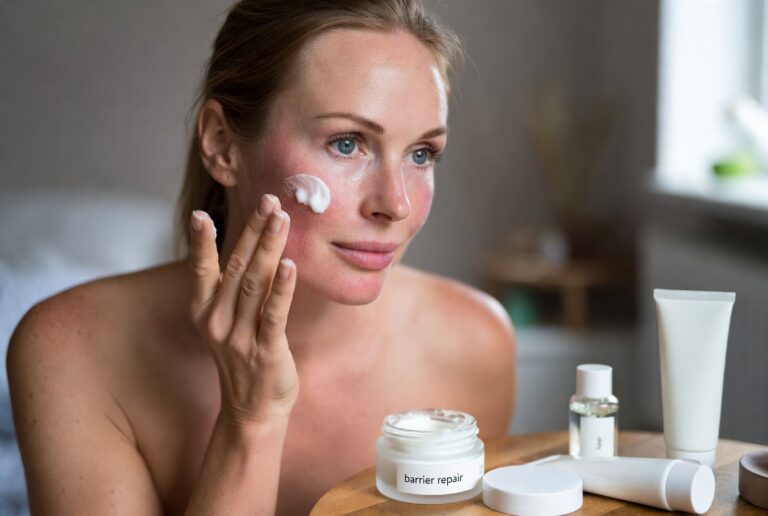
When your skin barrier feels damaged, almost everything stings. Water burns. Moisturizer burns. Even air feels suspicious somehow. Sound familiar?
That’s why gentle skincare becomes the foundation of managing rosacea.
Choose a Mild Cleanser
Harsh cleansers strip away natural oils and worsen irritation. Instead, use a fragrance-free cleanser designed for sensitive skin.
Look for ingredients like:
- Glycerin
- Ceramides
- Aloe vera
- Colloidal oatmeal
Avoid products with:
- Alcohol
- Strong fragrance
- Menthol
- Sulfates
Your cleanser should leave your skin feeling soft, not squeaky tight.
Use Lukewarm Water
Hot water dilates blood vessels and increases redness. Very cold water can irritate sensitive skin too.
Lukewarm water usually works best. Boring? Maybe. Helpful? Absolutely.
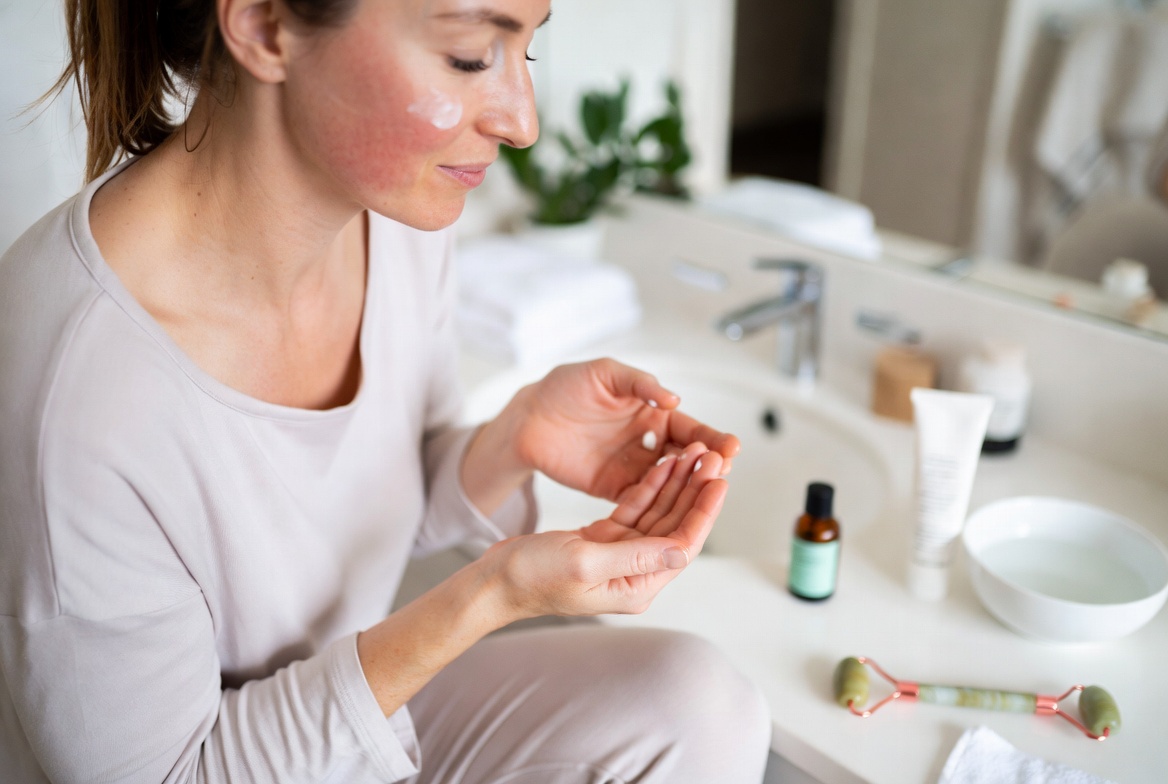
Moisturize Every Day
A damaged skin barrier makes rosacea flare ups more intense. Moisturizer helps protect and calm the skin.
Look for creams with:
- Niacinamide
- Ceramides
- Hyaluronic acid
- Squalane
These ingredients support hydration without overwhelming sensitive skin.
Pro tip: Apply moisturizer while your skin is still slightly damp. It helps trap hydration more effectively.
Wear Sunscreen Daily
Sun exposure is one of the biggest rosacea triggers. Even cloudy days can worsen redness.
Mineral sunscreens with zinc oxide or titanium dioxide are usually better tolerated than chemical sunscreens.
Aim for SPF 30 or higher every single day. Yes, even if you are staying indoors near windows. Sneaky sunlight counts too.
Avoid Over-Exfoliating
A lot of people scrub redness aggressively because they think it will “clean” the skin. Unfortunately, it often makes things worse.
Skip harsh scrubs, rough brushes, plus strong acids unless your dermatologist specifically recommends them.
Gentle skin usually becomes calmer skin.
Common Rosacea Triggers That Make Redness Worse
Understanding triggers is one of the most effective ways to learn how to reduce redness and rosacea naturally.
The annoying part? Triggers vary from person to person.
Still, some common patterns show up again and again.
Heat and Sun Exposure
Warm weather, saunas, hot showers, plus direct sunlight commonly trigger facial flushing.
Try these small adjustments:
- Sit in shaded areas outdoors
- Use cooling face mists
- Lower shower temperature
- Wear wide-brimmed hats
Little changes add up surprisingly fast.
Stress and Anxiety
Ever notice your skin flares during stressful weeks? That connection is real.
Stress increases inflammation and blood flow, which can trigger redness.
Simple stress management techniques help more than people realize:
- Walking outdoors
- Deep breathing
- Better sleep habits
- Yoga or stretching
- Listening to calming music
No, stress reduction does not magically cure rosacea. But it often reduces flare intensity.
Spicy Foods and Alcohol
Spicy foods increase blood flow and trigger flushing in many people. Alcohol, especially red wine, can do the same.
You do not necessarily need to cut them out forever. Tracking reactions in a notebook or phone app can help identify your personal triggers.
Sometimes the issue is quantity, not the food itself.
Skincare Products With Fragrance
Fragrance sounds harmless until your face suddenly feels like it lost a fight with a chili pepper.
Artificial fragrance commonly irritates rosacea-prone skin. Switching to fragrance-free products often improves redness within weeks.
Best Ingredients for Reducing Rosacea Redness
Some skincare ingredients genuinely help calm inflammation. Others just sound fancy on labels.
Here are the ones dermatologists frequently recommend.
Niacinamide
Niacinamide supports the skin barrier and reduces inflammation. It may also help improve uneven skin tone.
Most people tolerate concentrations between 2% and 5% well.
Azelaic Acid
Azelaic acid is one of the most researched rosacea treatments available. It helps reduce redness, bumps, and inflammation.
Many prescription creams use azelaic acid because it works without being overly harsh.
Some over-the-counter options exist too.
Green Tea Extract
Green tea contains antioxidants that soothe irritated skin. It may help reduce redness and sensitivity over time.
Honestly, it’s one of those ingredients that quietly does its job without much drama.
Sulfur
Sulfur helps reduce inflammation and acne-like bumps associated with rosacea.
It smells a little strange sometimes. Not going to lie. But many people see noticeable improvements with sulfur-based treatments.
Centella Asiatica
This plant extract, often called cica, supports skin healing and reduces irritation.
You’ll find it in many Korean skincare products designed for sensitive skin.
How Diet Can Affect Rosacea and Facial Redness
Food does not cause rosacea directly, but certain foods can trigger flare ups.
This part gets personal because everyone reacts differently.
Some people tolerate spicy tacos perfectly fine while others flush after one bite. Skin can be weird like that.
Foods That May Trigger Redness
Common trigger foods include:
- Spicy dishes
- Hot drinks
- Alcohol
- Very sugary foods
- Processed snacks
Keeping a simple food journal helps spot patterns over time.
Anti-Inflammatory Foods That May Help
Some foods may support calmer skin by reducing inflammation.
Try including more:
- Fatty fish like salmon
- Leafy greens
- Blueberries
- Nuts
- Olive oil
Drinking enough water matters too. Dehydrated skin often becomes more reactive.
Can Dairy Affect Rosacea?
For some people, yes. Especially certain high-fat dairy products.
But here’s the thing. Not everyone reacts to dairy. Cutting out entire food groups without evidence usually creates frustration more than results.
Track symptoms first before making huge dietary changes.
Medical Treatments for Rosacea Redness
Sometimes lifestyle changes alone are not enough. That does not mean you failed. Rosacea can be stubborn.
A dermatologist may recommend medical treatments depending on your symptoms.
Prescription Creams and Gels
Common prescription options include:
- Metronidazole
- Azelaic acid
- Ivermectin
- Brimonidine gel
Brimonidine temporarily constricts blood vessels, which can visibly reduce redness for several hours.
Oral Antibiotics
Low-dose doxycycline is commonly prescribed for inflammatory rosacea. It helps reduce swelling and bumps.
Interestingly, the dose used for rosacea is often lower than the amount used for infections.
Laser and Light Treatments
Laser therapy targets visible blood vessels and persistent redness.
Popular treatments include:
- Pulsed dye laser
- Intense pulsed light therapy
- Nd:YAG laser
Results vary, but many people notice significant improvement after several sessions.
These treatments can be expensive though. That’s the frustrating part.
Everyday Habits That Help Calm Rosacea
Sometimes it’s the tiny habits that matter most.
Wash Pillowcases Often
Bacteria, oil, plus product buildup collect on pillowcases quickly.
Changing them every few days can help reduce irritation.
Keep Makeup Simple
Heavy foundation sometimes traps heat and worsens redness.
Mineral makeup often works better for sensitive skin because it feels lighter.
Green-tinted primers can also help neutralize redness visually.
Exercise Smartly
Exercise benefits overall health, but intense workouts may trigger flushing.
Try:
- Exercising in cooler rooms
- Taking breaks
- Drinking cold water
- Walking instead of high-intensity sessions during flare ups
You do not have to stop exercising completely.
Sleep Matters More Than You Think
Poor sleep increases stress hormones and inflammation.
A consistent sleep schedule often helps both your skin plus your mood. Funny how connected everything is.
How to Reduce Redness and Rosacea During Flare Ups
Flare ups happen. Even when you’re doing everything “right.”
When redness suddenly spikes, focus on calming the skin instead of attacking it.
Here’s what usually helps:
- Use cool compresses
- Pause active ingredients temporarily
- Stick to gentle moisturizer
- Avoid hot environments
- Drink cool water
- Simplify your skincare routine
Less really can be more during flare ups.
I know the temptation is to pile on products hoping something fixes it overnight. Most of us have done that at least once. Usually, calmer routines work better.
Emotional Effects of Rosacea
This part does not get discussed enough.
Persistent redness can affect confidence, social interactions, plus mental health. Some people avoid photos or social events because they feel embarrassed about flushing.
That emotional stress can then worsen rosacea. Kind of a rude cycle, honestly.
Remember this though. Rosacea is extremely common. It does not make you unhealthy, unattractive, or “bad” at skincare.
Skin conditions are human.
And while treatment helps, self-compassion matters too.
Conclusion
Learning how to reduce redness and rosacea takes patience, consistency, plus a little trial and error. Gentle skincare, trigger awareness, healthy habits, and proper treatment often work together to calm irritated skin over time.
You do not need perfect skin to feel confident. Small improvements matter. Even fewer flare ups can make daily life feel easier and more comfortable.
Start simple. Pay attention to your triggers. Be patient with your skin. What small change could you try this week?
FAQs
1. What is the fastest way to reduce rosacea redness?
Cool compresses, gentle moisturizers, plus avoiding triggers like heat and spicy foods can quickly calm redness. Prescription treatments may work faster for persistent symptoms.
2. Can rosacea go away permanently?
Rosacea usually cannot be permanently cured, but many people successfully manage symptoms with consistent skincare and lifestyle adjustments.
3. Which ingredients should people with rosacea avoid?
Avoid alcohol-based products, strong fragrance, harsh exfoliants, menthol, plus aggressive acids unless recommended by a dermatologist.
4. Does stress really worsen rosacea?
Yes. Stress can increase inflammation and blood flow, which may trigger flushing and redness in many people.
5. Is sunscreen necessary for rosacea?
Absolutely. Sun exposure is one of the most common rosacea triggers. Daily sunscreen helps prevent flare ups and protects sensitive skin.
6. Can makeup make rosacea worse?
Heavy or fragranced makeup may irritate sensitive skin. Mineral makeup and fragrance-free products are usually safer options.
7. Are natural remedies effective for rosacea?
Some natural remedies like green tea, aloe vera, and oatmeal may soothe redness. However, results vary, and severe rosacea often requires medical treatment.
8. Should you exfoliate rosacea-prone skin?
Usually very gently, if at all. Over-exfoliating often worsens irritation and redness.
9. What foods commonly trigger rosacea flare ups?
Spicy foods, alcohol, hot drinks, and sugary processed foods commonly trigger redness in sensitive individuals.
10. When should you see a dermatologist for rosacea?
See a dermatologist if redness becomes persistent, painful, affects your eyes, or does not improve with gentle skincare and lifestyle changes.