Retinol works. That part is well-established. It speeds up cell turnover, stimulates collagen production, fades dark spots, and smooths fine lines over time. The problem is that most people start using it wrong, experience peeling and redness, and quit within two weeks.
Learning how to use retinol without irritation is not about avoiding the ingredient. It is about introducing it in a way your skin can actually handle.
Why Retinol Causes Irritation in the First Place
Retinol is a form of vitamin A that converts to retinoic acid once absorbed into the skin. That conversion process is what makes it effective, but it also causes retinization, the adjustment period where your skin reacts to an ingredient it is not yet used to.
During retinization, you may experience:
- Redness and warmth
- Peeling or flaking skin
- Tightness and dryness
- Increased sensitivity to other products
This phase is temporary for most people. The goal is to minimize it, not skip retinol entirely.
How to Use Retinol Without Irritation: A Step-by-Step Approach
1. Start With the Lowest Concentration Available
Retinol comes in concentrations ranging from 0.025% all the way up to 1% and beyond in prescription-strength forms. Higher does not mean faster when it comes to results; it mostly means a higher chance of irritation.
Start at 0.025% or 0.05%. Your skin needs time to build tolerance before you work up to stronger formulas.
2. Introduce It Slowly With the “Sandwich” Method
The sandwich method is one of the most effective ways to ease into retinol without overwhelming your skin. Here is how it works:
- Apply your regular moisturizer first
- Wait a few minutes for it to absorb
- Apply a small amount of retinol over the moisturizer
- Follow with another thin layer of moisturizer on top
The moisturizer layers buffer the retinol and slow its absorption slightly, reducing the intensity of the initial reaction. As your skin builds tolerance, you can eventually apply retinol directly to clean skin.
3. Use It Only at Night
Retinol breaks down in sunlight and becomes less effective. More practically, it also makes your skin more sensitive to UV (ultraviolet) radiation, which increases the risk of sun damage.
Always apply retinol as part of your nighttime routine. Sunscreen every morning is non-negotiable when you are using retinol regularly.
4. Apply on Dry Skin
Damp skin absorbs products faster and more deeply. That sounds good in theory, but with retinol it increases the chance of irritation. Apply retinol only after your skin has fully dried after cleansing, usually about two to three minutes after washing your face.
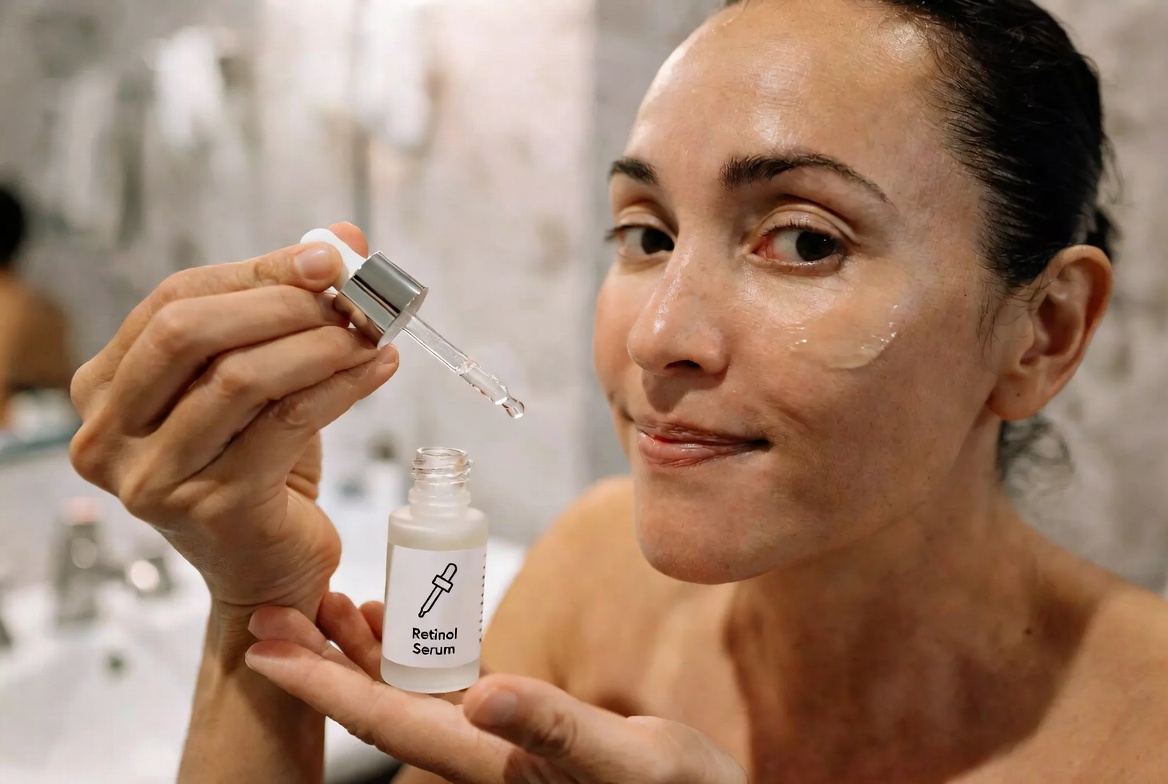
5. Use a Pea-Sized Amount
More product does not give you better results with retinol. A pea-sized amount is enough to cover your entire face. Using too much is one of the most common reasons people experience unnecessary redness and peeling.
Dot it across your forehead, cheeks, and chin, then spread it evenly with light upward strokes. Avoid the corners of the nose and mouth, and the area directly under the eyes, at least when you are starting out.
6. Follow a Once-a-Week Schedule at First
This is where most people go wrong. They use retinol every night from the start and wonder why their skin falls apart by week two.
A realistic schedule for a beginner looks like this:
- Weeks 1 and 2: Apply once a week
- Weeks 3 and 4: Apply twice a week
- Month 2: Apply every other night
- Month 3 and beyond: Apply nightly if your skin tolerates it
Slow progression lets your skin build tolerance without a dramatic reaction. It also means fewer setbacks.
Products That Help Reduce Retinol Irritation
1. A Gentle, Fragrance-Free Cleanser
Avoid anything stripping before applying retinol. A mild cream or gel cleanser that respects your skin’s pH keeps the surface barrier intact, which means less irritation overall.
2. A Ceramide-Rich Moisturizer
Ceramides repair and reinforce the skin barrier, which takes a hit during the retinization phase. Using a ceramide moisturizer as your buffer, or as your final step, significantly reduces dryness and peeling.
3. Plain Petrolatum for Spot Protection
If certain areas of your face are particularly sensitive, like the corners of your nose or mouth, apply a thin layer of petroleum jelly over those spots before retinol. It acts as a physical barrier and prevents the retinol from absorbing into already-irritated skin.
Ingredients to Avoid Combining With Retinol
Some ingredients genuinely do not play well with retinol, especially when you are just starting out.
- AHAs and BHAs: Exfoliating acids like glycolic acid or salicylic acid combined with retinol can over-sensitize your skin quickly. Use them on alternate nights if you need both in your routine.
- Benzoyl peroxide: This can oxidize and deactivate retinol, making it less effective while also irritating the skin.
- Vitamin C: Some people tolerate both fine, but during the initial retinization phase it is better to keep your routine simple. Use vitamin C in the morning and retinol at night.
- Other retinoids: Only use one retinol or retinoid product at a time. Layering them does not improve results and dramatically increases the risk of damage to your skin barrier.
What to Do If Your Skin Reacts Badly
Some irritation during the first few weeks is normal. Severe redness, burning, or prolonged peeling is not.
If your skin reacts strongly, take a full break from retinol for at least one to two weeks. Focus on repairing your skin barrier with gentle products and ceramide moisturizers before trying again. When you do restart, drop back to a lower concentration and a once-a-week schedule.
Pushing through significant irritation does not speed up results. It delays them by damaging the barrier your skin needs to actually benefit from the ingredient.
Common Mistakes to Avoid
- Using retinol around the eye area too soon. The skin there is thinner and more reactive. Wait until your skin has built solid tolerance before applying anywhere near your eyes.
- Forgetting sunscreen. Retinol increases photosensitivity. Skipping SPF while using retinol is a fast track to sun damage.
- Layering too many actives. A retinol routine works best when the rest of your routine is simple. Cleanse, moisturize, apply retinol, moisturize again. That is it.
- Expecting results in two weeks. Retinol takes time. Meaningful improvement in skin texture and tone typically shows up after 12 weeks of consistent use. Results for deeper concerns like fine lines can take six months or more.
Frequently Asked Questions
1. Can beginners use retinol every night right away?
No. Starting with nightly use almost always causes significant irritation. Begin with once a week and increase frequency gradually over several months as your skin builds tolerance.
2. What concentration of retinol should a beginner start with?
Start with 0.025% or 0.05%. These concentrations are gentle enough to introduce without major irritation while still being effective over time.
3. Is it normal for skin to peel when starting retinol?
Some light flaking during the first few weeks is part of the retinization process and is considered normal. Significant peeling, redness, or burning is a sign you are using too much too soon.
4. Can I use retinol if I have sensitive skin?
Yes, but with extra caution. Use the lowest available concentration, always buffer with moisturizer, and start with once every ten days. Look for encapsulated retinol formulas, which release more slowly and cause less immediate irritation.
5. How long before I see results from retinol?
Most people notice improvements in skin texture within six to eight weeks. Visible changes in dark spots and fine lines typically take three to six months of consistent use.
Conclusion
Retinol is worth the patience it requires. The key to use retinol without irritation is a slow start, a simple supporting routine, and realistic expectations. Begin low, go slow, protect your barrier, and wear your SPF every morning. Your skin will adjust, and the results are worth the wait. Start this week with the lowest concentration you can find and commit to a full three months before you judge it.