Retinol intimidates people. You’ve heard it works miracles for wrinkles and skin texture, but you’ve also heard horror stories about peeling, redness, and sensitivity. The truth sits somewhere in between, and starting smart makes all the difference.
The best retinol creams for beginners exist specifically to introduce your skin to this powerhouse ingredient without the drama. We’ve researched formulas that deliver results while minimizing the adjustment period that scares so many people away.
Top Picks at a Glance
- Best Overall: CeraVe Skin Renewing Retinol Serum
- Best Budget: The Ordinary Retinol 0.2% in Squalane
- Best Encapsulated: RoC Retinol Correxion Line Smoothing Night Serum Capsules
Best Retinol Creams for Beginners (Product Reviews)
1. CeraVe Skin Renewing Retinol Serum
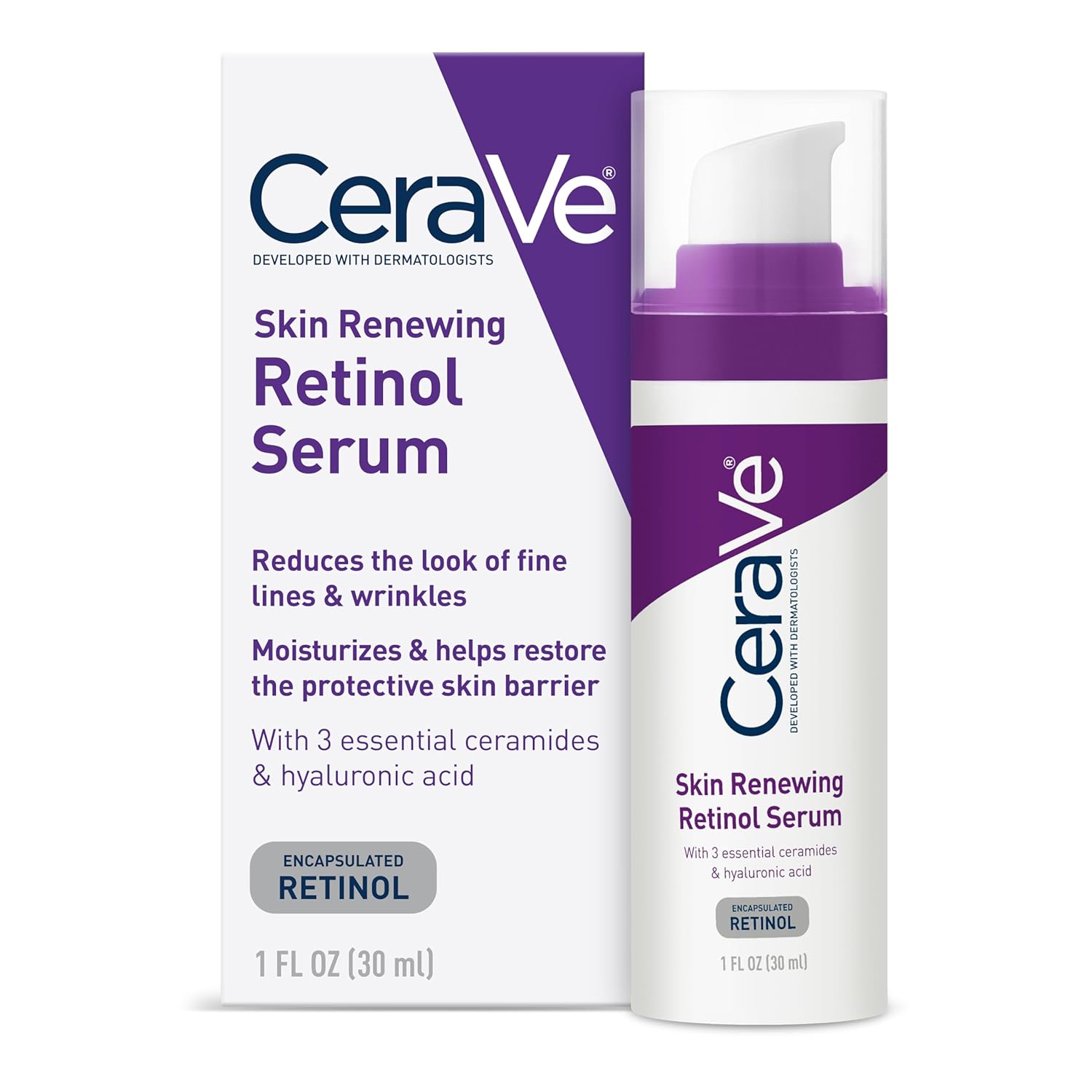
This serum earns its spot as the beginner gold standard. The formula pairs retinol with three essential ceramides that reinforce your skin barrier while the retinol works. This dual approach means less irritation and better results than retinol alone.
The concentration sits at an undisclosed but effective level, enough to work but not enough to overwhelm first-time users. CeraVe uses licorice root extract to brighten skin and niacinamide to calm inflammation. These additions mean your skin gets multiple benefits beyond just retinol.
The MVE Technology releases ingredients gradually over time instead of all at once. This time-release approach reduces the peak irritation that often happens with immediate-release retinols. Your skin gets steady exposure rather than a sudden flood of active ingredients.
The serum texture absorbs quickly without stickiness. It layers well under moisturizer, which you’ll definitely want when starting retinol. The purple glass bottle protects the formula from light degradation, keeping the retinol stable and effective. One pump covers your entire face.
Pros:
- Ceramides protect skin barrier during retinol introduction
- Time-release technology minimizes irritation
- Niacinamide and licorice root add extra benefits
- Fragrance-free formula for sensitive skin
- Dermatologist developed and tested
- Affordable for consistent long-term use
Cons:
- Lower concentration may require eventual upgrade
2. The Ordinary Retinol 0.2% in Squalane
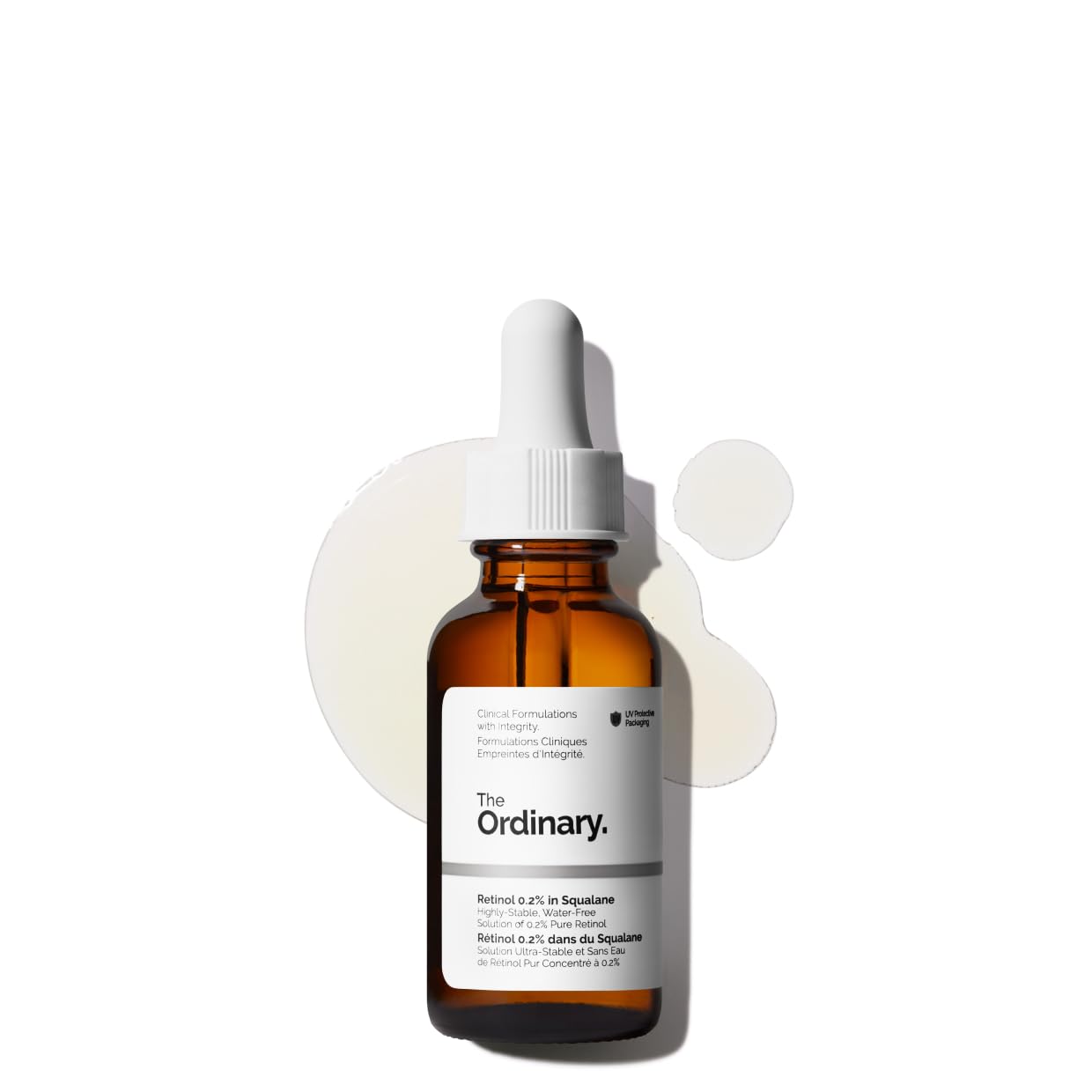
This oil-based serum makes retinol accessible both financially and practically. The 0.2% concentration represents an ideal starting point, low enough to minimize reaction but high enough to see results. The squalane base provides slip and hydration that help retinol spread evenly across skin.
Squalane mimics your skin’s natural oils, so it absorbs beautifully without leaving greasy residue. This plant-derived version comes from sugarcane rather than shark liver, making it a sustainable choice. The emollient nature helps buffer some of retinol’s drying effects.
The minimalist formula contains just retinol and squalane. No fragrance, no unnecessary additives, no confusing ingredient lists. This simplicity makes it perfect for people who want to understand exactly what they’re putting on their skin. The yellow tint comes from the retinol itself, not added color.
The dropper bottle gives you control over dosage. Start with 2-3 drops for your whole face. The product spreads easily, so you don’t need much. Many beginners find they can use this for 4-6 months before their skin adapts and they need to level up to The Ordinary’s 0.5% or 1% formulas.
Pros:
- Very affordable entry point to retinol
- Clean, simple formula easy to understand
- Squalane base provides hydration
- Multiple strength options for gradual progression
- Vegan and cruelty-free
- Dropper allows precise dosing
Cons:
- Oil base may feel heavy for very oily skin
3. RoC Retinol Correxion Line Smoothing Night Serum Capsules
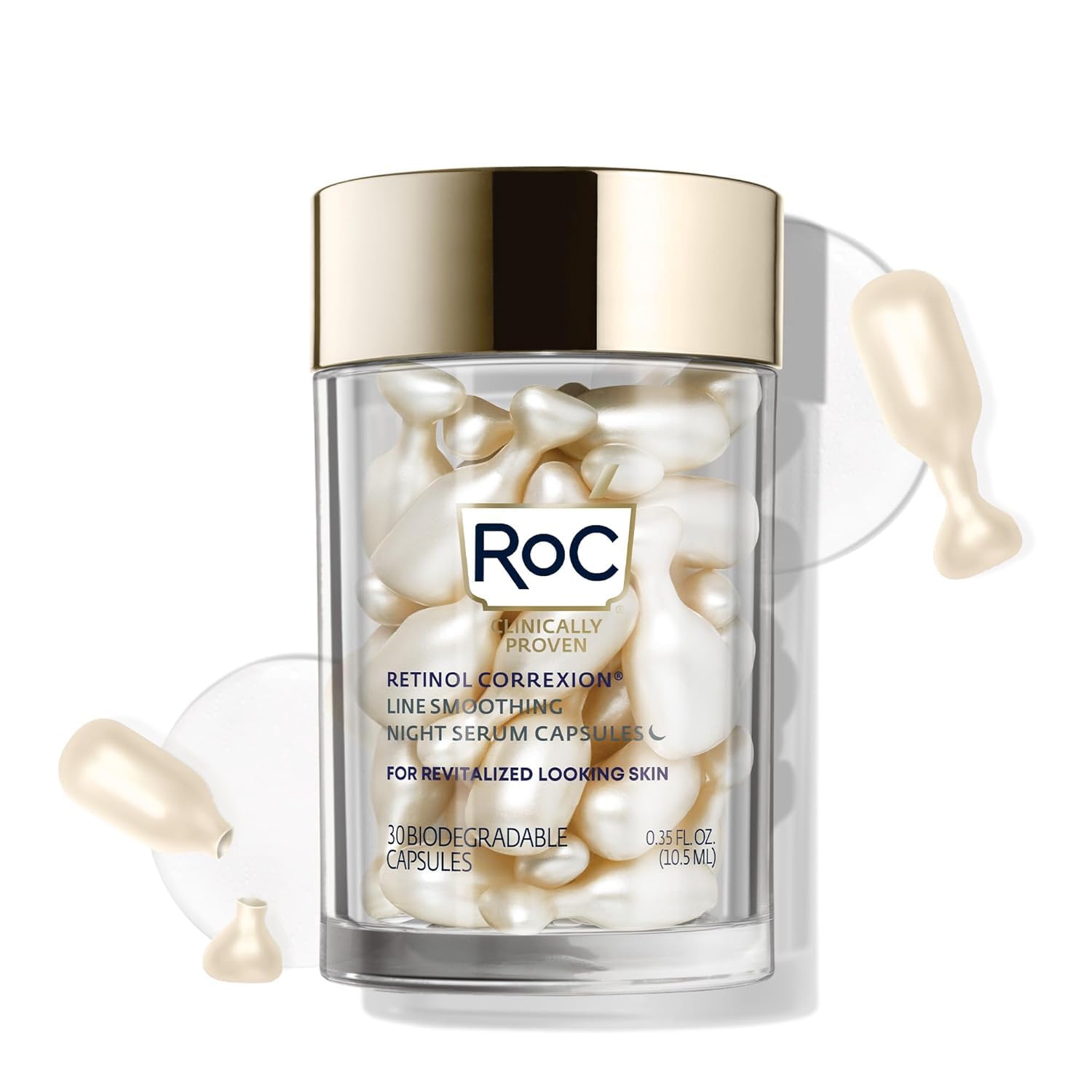
These single-dose capsules solve the stability problem that plagues many retinol products. Each biodegradable capsule contains one night’s worth of retinol serum, sealed away from air and light until you twist it open. This means the retinol stays at full potency from first use to last.
The mineral complex in the formula hydrates while the retinol resurfaces. You get deep moisture alongside exfoliation, which prevents that tight, uncomfortable feeling many retinol users experience. The serum texture feels rich but absorbs completely within a minute.
The capsule format takes guesswork out of dosing. You’re not wondering if you used too much or too little, it’s pre-measured for optimal results. This consistency helps your skin adapt on a predictable schedule rather than dealing with variable amounts night to night.
The downside of capsules is you can’t customize the amount. If your skin needs less initially, you can’t easily use half a capsule. However, most people find the dose appropriate, and the packaging prevents the waste that happens when opened retinol products oxidize before you finish them.
Pros:
- Individual capsules maintain retinol stability
- Pre-measured doses ensure consistency
- Mineral complex provides hydration
- Travel-friendly packaging
- No exposure to air until use
- Results typically visible within 4 weeks
Cons:
- Cannot adjust dosage easily
4. Neutrogena Rapid Wrinkle Repair Retinol Pro+ 0.5% Power Serum
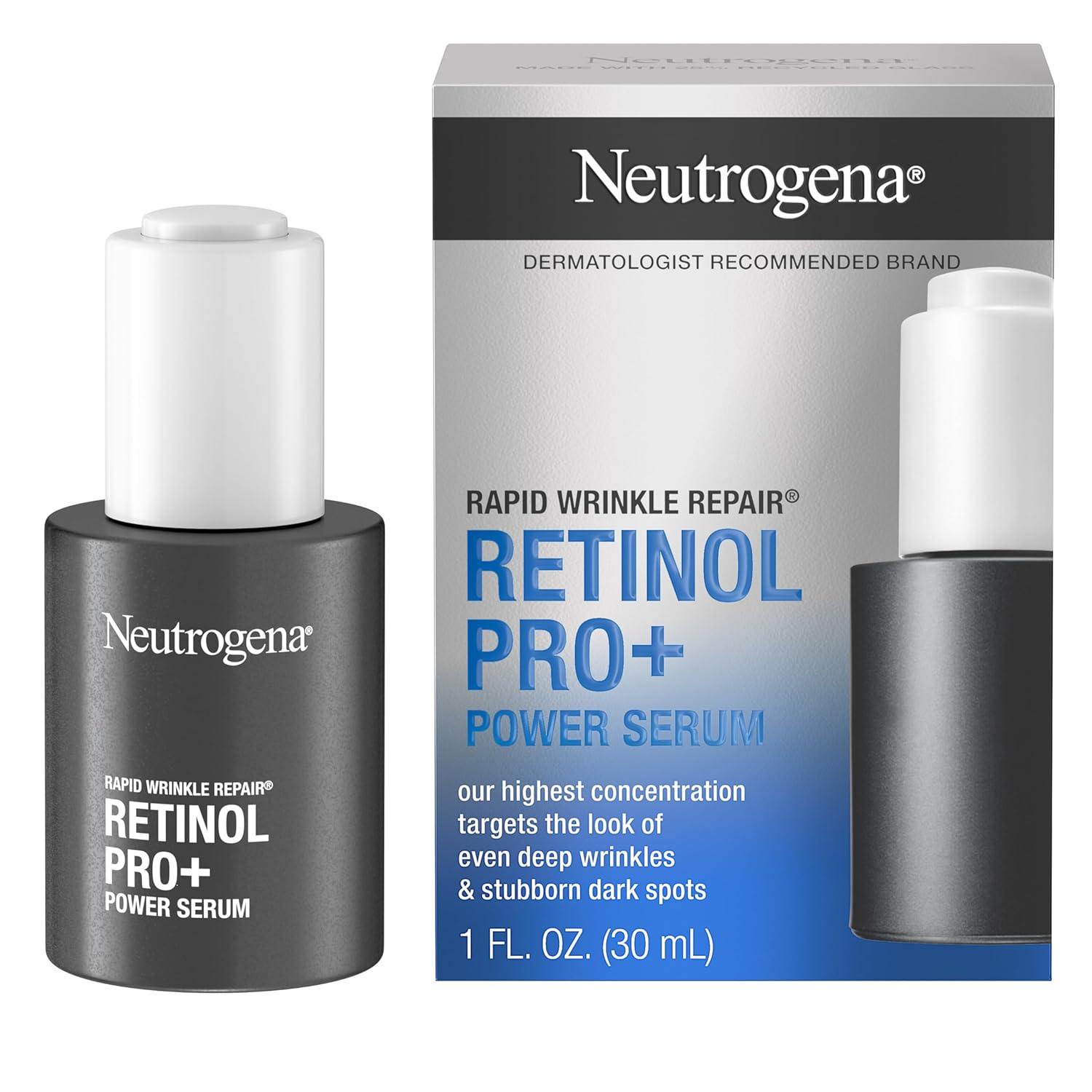
This formula uses Neutrogena’s accelerated retinol SA, a patented form that claims faster results than standard retinol. The 0.5% concentration sits at the upper end of beginner-friendly but still gentler than prescription strength. The glucose complex in the formula helps speed delivery and results.
Hyaluronic acid provides intense hydration that helps counteract retinol’s drying effects. The combination means your skin gets plumping moisture alongside wrinkle reduction. Many users report seeing improvements in fine lines within two weeks, which is notably faster than typical retinol timelines.
The lightweight serum texture layers beautifully under night cream. It doesn’t pill or ball up when you apply moisturizer over it. The purple pump bottle protects the formula from light and dispenses cleanly without waste. Two pumps cover face and neck adequately.
Some people find this formula too strong for true beginner use, reporting initial redness and peeling. If you have particularly sensitive skin, you might want to start with a lower concentration and work up to this one. But for resilient skin ready for faster results, this accelerates your timeline.
Pros:
- Accelerated formula produces faster visible results
- Hyaluronic acid prevents excessive dryness
- Lightweight serum texture
- Pump packaging maintains stability
- Widely available at drugstores
Cons:
- May be too strong for very sensitive skin
5. Good Molecules Gentle Retinol Cream
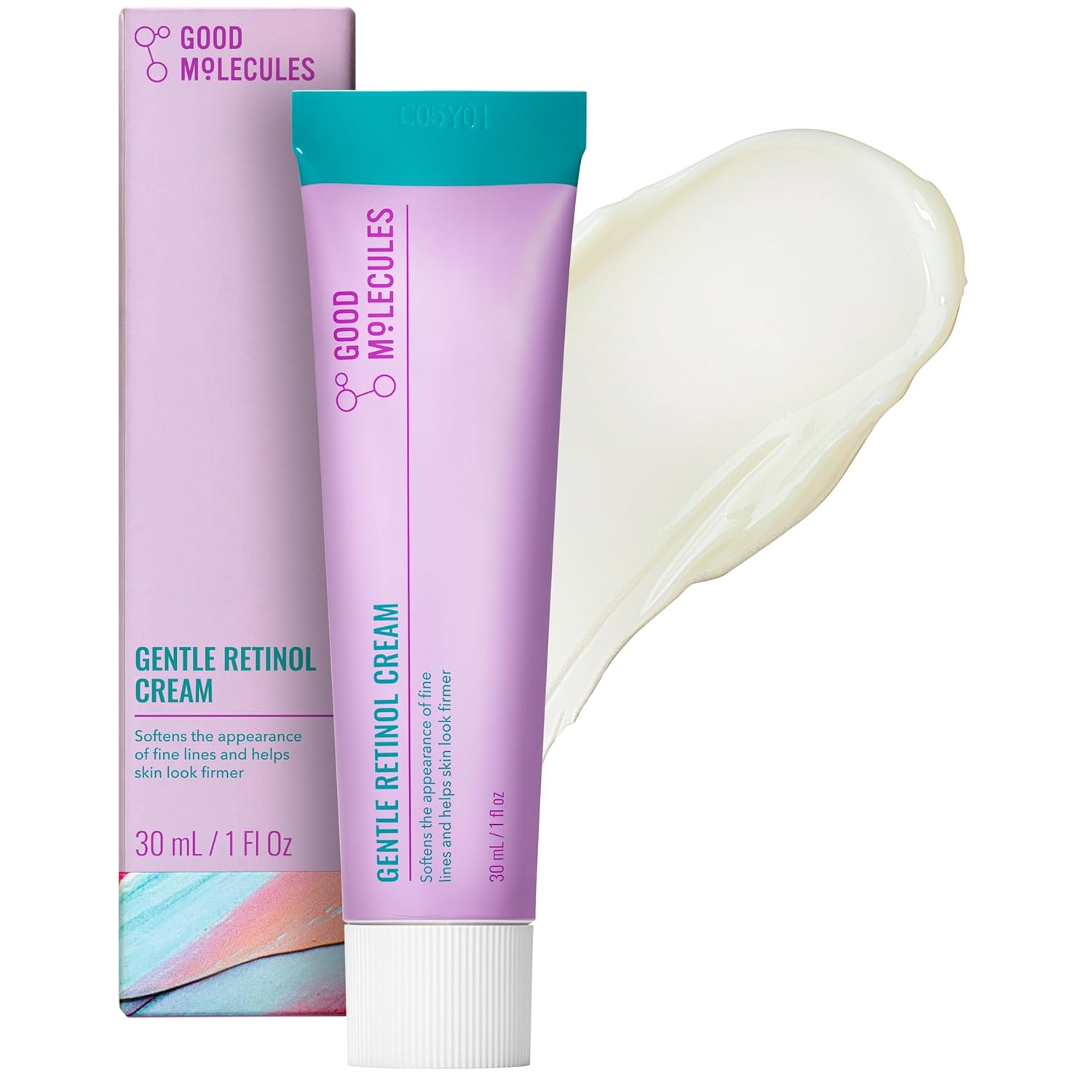
This cream offers a truly gentle introduction with a low but effective retinol concentration buffered by soothing ingredients. Bisabolol and allantoin calm skin while the retinol works, reducing the irritation that can discourage beginners from sticking with the product long enough to see results.
The cream texture provides more moisture than serum formulas, making it suitable for people with dry or dehydrated skin entering the retinol world. You can use this as your nighttime moisturizer rather than adding another step to your routine. The thick consistency spreads easily despite its richness.
Sunflower seed oil and jojoba oil provide emollient benefits without clogging pores. These natural oils help the cream absorb while delivering essential fatty acids that support your skin barrier. The fragrance-free formula won’t compete with other products in your routine.
The generous tube size provides excellent value, especially given the affordable price point. You get enough product for 2-3 months of nightly use. The simple packaging keeps costs down while protecting the formula adequately.
Pros:
- Truly gentle formula for sensitive beginners
- Cream texture provides built-in moisture
- Soothing ingredients minimize irritation
- Can replace regular night cream
- Excellent value for size
- Fragrance-free formula
Cons:
- May feel too heavy in humid climates
Choosing the Best Retinol Creams for Beginners (Buying Guide)
1. Start with the Right Concentration
Beginners should start between 0.1% and 0.3% retinol concentration. This range provides visible results without overwhelming your skin’s tolerance. You can always increase concentration later once your skin adapts. Starting too strong often leads to abandoning retinol entirely due to irritation.
Over-the-counter retinol maxes out around 1-2%, while prescription retinoids like tretinoin are significantly stronger. Don’t assume higher percentages automatically mean better results. Consistent use of lower concentrations often outperforms inconsistent use of strong formulas.
Percentage alone doesn’t tell the whole story. Formulation matters enormously. A 0.5% retinol in a well-buffered cream might cause less irritation than 0.3% in a bare-bones formula. Look at the complete ingredient list, not just the retinol number.
2. Understand Supporting Ingredients
Ceramides rebuild and maintain your skin barrier while retinol works its magic. This protection reduces water loss and sensitivity that can derail your retinol journey. Products combining retinol with ceramides help your skin tolerate higher concentrations faster.
Hyaluronic acid attracts moisture to plump skin and counteract retinol’s initially drying effect. Well-hydrated skin responds better to retinol with less flaking and tightness. Multiple molecular weights of HA provide both surface and deep hydration.
Niacinamide calms inflammation and supports skin barrier function. It pairs beautifully with retinol despite old myths about incompatibility. Modern formulations successfully combine these ingredients for enhanced results with reduced irritation.
3. Choose Your Delivery System
Encapsulated retinol releases gradually over several hours, reducing the irritation spike that happens with immediate-release formulas. This time-release approach helps beginners tolerate retinol better. The trade-off is potentially slower visible results compared to fast-acting formulations.
Stabilized retinol formulas use packaging and formula technology to prevent oxidation and degradation. Air-tight pumps, opaque bottles, and antioxidant ingredients keep retinol potent from first use to last. Stability matters more than most people realize, degraded retinol doesn’t work.
Retinol esters like retinyl palmitate or retinyl acetate convert to active retinol in your skin. They’re gentler than pure retinol but require your skin to convert them, which some people do more efficiently than others. These work well for extremely sensitive skin starting out.
4. Build a Retinol-Friendly Routine
Cleanse gently before applying retinol. Harsh cleansers compromise your skin barrier, making it more vulnerable to retinol irritation. Save active cleansers for non-retinol nights initially.
Wait for completely dry skin before applying retinol. Even slightly damp skin allows retinol to penetrate deeper, increasing irritation risk. Give your skin 10-15 minutes after cleansing before applying retinol products.
Buffer with moisturizer if needed. Applying moisturizer before retinol slows absorption and reduces irritation. This “sandwich method” helps extremely sensitive skin tolerate retinol. Apply moisturizer, wait 20 minutes, apply retinol, then apply more moisturizer over top.
5. Set Realistic Expectations
Visible results take 8-12 weeks minimum. Your skin needs time to adjust and respond to retinol. Taking progress photos helps you see gradual changes you might miss in the mirror. Don’t give up before the magic happens.
Initial purging might occur as retinol speeds cell turnover. This temporary increase in breakouts usually passes within 2-4 weeks. True purging happens only in areas where you typically break out. New breakouts in unusual places suggest irritation, not purging.
Dryness and flaking are normal initially. Your skin is adjusting to increased cell turnover. This typically improves after the first month as your skin adapts. Heavy moisturizer and gentle exfoliation help manage this phase.
6. Know When to Slow Down
Red, burning skin signals you’re overdoing it. Scale back frequency or concentration immediately. Pushing through severe irritation can damage your skin barrier and set you back weeks. Listen to your skin’s signals.
Persistent peeling beyond the first month suggests your skin isn’t tolerating your current approach. Either reduce frequency, lower concentration, or add more buffering products to your routine. Retinol should improve skin texture, not destroy it.
Increased sensitivity to other products indicates compromised skin barrier. If your regular products suddenly sting or irritate, your retinol regimen needs adjustment. Give your barrier time to repair before resuming retinol.
Frequently Asked Questions
1. How often should beginners use retinol?
Start with once or twice weekly for the first 2-3 weeks. This allows your skin to adapt gradually. Increase to every other night for another 2-3 weeks, then move to nightly use if your skin tolerates it well. Some people find their sweet spot at 4-5 nights weekly rather than every night, and that’s perfectly fine.
2. Should I use retinol in the morning or at night?
Always use retinol at night. UV light degrades retinol, making it ineffective. More importantly, retinol increases sun sensitivity, making UV damage more likely. Apply retinol before bed and use broad-spectrum SPF 30 or higher every morning without exception.
3. Can I use retinol with vitamin C?
Modern formulations allow layering vitamin C in the morning and retinol at night without issues. Using both in the same application can cause irritation for some people. Keep them separate (vitamin C for morning protection, retinol for nighttime renewal) for best results and minimal irritation.
4. What’s the difference between retinol and retinoids?
Retinoids is the umbrella term for all vitamin A derivatives. Retinol is a specific type of retinoid available over-the-counter. Prescription retinoids like tretinoin (Retin-A) are stronger and faster-acting but require doctor supervision. Beginners should start with over-the-counter retinol before considering prescription strength.
5. How long before I see results from retinol?
Most people notice smoother texture within 4-6 weeks. Fine lines and wrinkles take 8-12 weeks to show improvement. Significant anti-aging results require 6 months of consistent use. Patience is crucial, retinol rewards persistence, not quick experimentation.
6. Can I use retinol every night as a beginner?
Most beginners need to build tolerance gradually before nightly use. Starting with nightly application often leads to irritation that could have been avoided. Work up to every night over 6-8 weeks rather than jumping in immediately. Some people find alternating nights works better long-term than forcing nightly use.
7. Should I avoid retinol around my eyes?
The delicate eye area can tolerate retinol, but many beginners experience irritation there first. Start by avoiding the immediate eye area, then gradually include it once the rest of your face tolerates retinol well. Dedicated eye creams with retinol use lower concentrations suitable for this sensitive zone.
8. Do I still need retinol if I’m in my 20s?
Starting retinol in your 20s prevents visible aging before it happens. Preventive use is easier than corrective use later. Lower concentrations work perfectly for prevention. You don’t need aggressive formulas until you’re actually addressing existing damage.
9. Why is my retinol cream not working?
Insufficient time is the most common reason. Retinol requires months of consistent use. Inconsistent application also reduces effectiveness, using retinol sporadically won’t deliver results. Finally, degraded product loses potency. Check expiration dates and storage conditions.
10. Can I use retinol while pregnant or breastfeeding?
Avoid retinol during pregnancy and breastfeeding. While topical retinol isn’t the same as oral vitamin A derivatives that cause birth defects, doctors recommend avoiding all retinoids as a precaution. Safe alternatives like azelaic acid, vitamin C, and niacinamide provide skin benefits without risk.
Conclusion
The best retinol creams for beginners combines effective concentration with smart formulation that protects your skin during adaptation. Whether you choose pharmaceutical precision or budget-friendly basics, what matters most is starting and sticking with it. Your skin’s future thanks you for beginning this journey thoughtfully rather than aggressively.