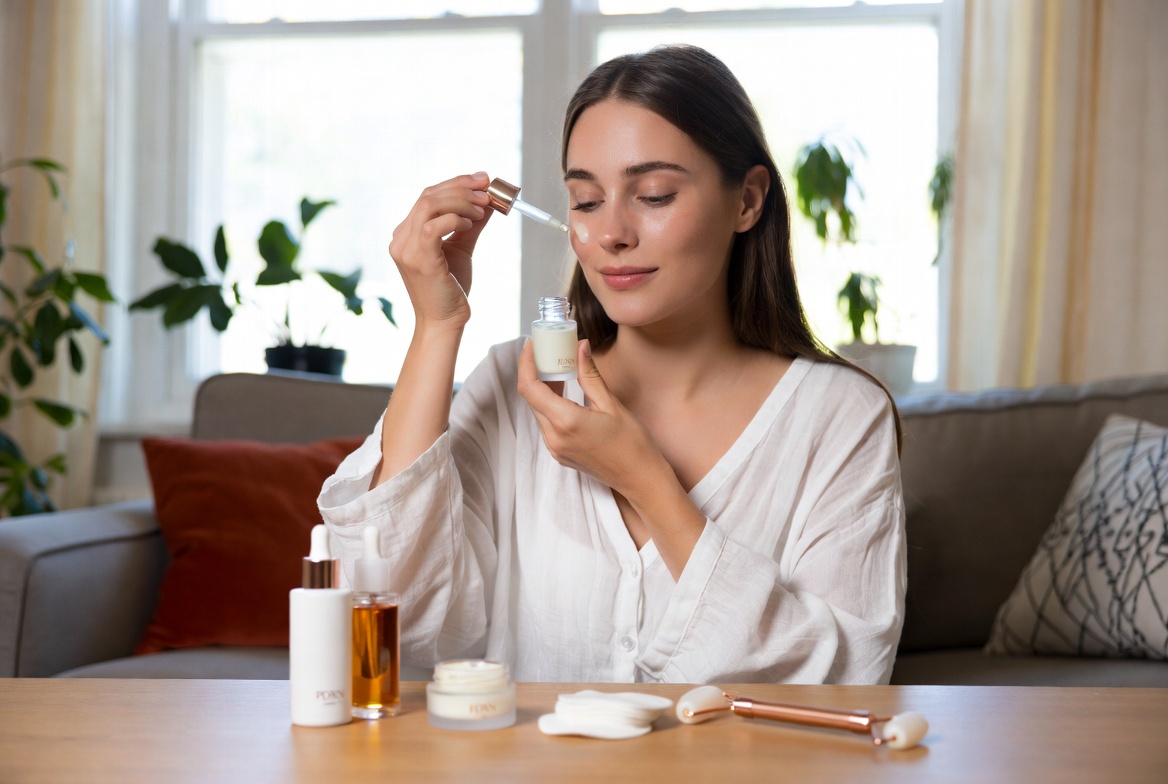
If you follow advanced skincare trends, PDRN has been showing up with increasing frequency. It started in clinical dermatology and aesthetic medicine, and it is now crossing over into professional skincare products. The attention is warranted.
This PDRN skincare ingredient guide covers what it is, how it works on a biological level, what it can realistically do for your skin, and how to use it effectively.
What PDRN Is
PDRN stands for Polydeoxyribonucleotide. It is a bioactive compound derived from the DNA of salmon or trout sperm cells. The DNA is highly purified and processed to isolate the fragment that stimulates tissue repair in human cells.
The use of salmon DNA in medicine is not new. PDRN has been used in wound healing and ophthalmology for decades. Its application in skincare is a more recent development, building on decades of clinical research in regenerative medicine.
How PDRN Works on Skin
1. Activating Adenosine Receptors
PDRN stimulates adenosine A2A receptors on human cells. Activating these receptors triggers a cascade of repair and regeneration processes, including increased collagen and elastin synthesis and reduced inflammatory signalling.
This is not superficial. It is a direct biological intervention in how skin cells behave, which is why PDRN is categorised as a regenerative ingredient rather than simply cosmetic ingredients.
2. Salvage Pathway for DNA Repair
PDRN provides cells with nucleotide building blocks through what is called the salvage pathway. Rather than synthesising new nucleotides from scratch, cells can use the fragments provided by PDRN to repair damaged DNA and produce new cellular material more efficiently.
This is especially relevant in photoaged or chronically damaged skin, where cellular repair mechanisms have slowed down significantly.
3. Anti-Inflammatory Action
PDRN reduces the expression of pro-inflammatory cytokines, the signalling proteins responsible for sustained skin inflammation. Lowering chronic low-level inflammation is one of the key mechanisms behind its ability to improve the appearance of damaged and aging skin.
Proven PDRN Skincare Benefits
1. Collagen and Elastin Stimulation
Multiple published studies demonstrate that PDRN significantly increases collagen synthesis in skin fibroblasts. This leads to improved skin density, firmness, and a visible reduction in fine lines with consistent use over time.
2. Wound Healing and Recovery
PDRN has strong clinical backing for accelerating wound healing. In the context of skincare, this translates to faster recovery after procedures like microneedling, laser resurfacing, or chemical peels. Applying PDRN post-procedure reduces downtime and enhances results.
3. Hydration and Skin Texture
PDRN improves the skin’s capacity to retain moisture by supporting the extracellular matrix, the structural network that holds skin cells together. Users consistently report softer texture, a more plump appearance, and longer-lasting hydration.
4. Reducing Hyperpigmentation
By reducing inflammation and supporting cellular turnover, PDRN helps fade pigmentation caused by sun damage, post-inflammatory marks, and hormonal changes. Its anti-inflammatory mechanism specifically interrupts the inflammatory trigger that leads to excess melanin production.
5. Skin Barrier Repair
PDRN accelerates the regeneration of skin barrier components by providing fibroblasts with the materials they need to produce new structural proteins. For chronically compromised or reactive skin, this makes PDRN a valuable part of a recovery-focused routine.
PDRN Skincare Ingredient Guide: Forms of PDRN in Skincare
Injectable PDRN
The most well-established format. Injected directly into the dermis by a dermatologist or aesthetic practitioner. Used clinically for skin rejuvenation, acne scarring, and photoaging. Results are measurable and consistent.
Topical PDRN Serums and Ampoules
These have increased in availability and quality significantly in recent years. While topical absorption of large molecules like PDRN faces challenges, advances in delivery technology, including liposomal encapsulation and nano-emulsification, have improved penetration meaningfully.
Professional-grade topical PDRN products applied immediately after microneedling or laser treatment have particularly strong evidence for efficacy.
Hybrid Treatments
Some clinics now use PDRN in combination with other injectable biostimulators such as polynucleotides (PN) or hyaluronic acid, as well as in microneedling protocols where the serum is applied during the procedure for deeper delivery.
How to Use PDRN in Your Skincare Routine
As a Topical Product at Home
- Apply after cleansing, on slightly damp skin
- Follow with a ceramide moisturiser to seal in the active
- Use morning and evening for best results
- Pair with SPF in the morning since cellular repair processes benefit from UV protection
- Compatible with niacinamide, hyaluronic acid, and peptides
- Introduce carefully alongside retinoids; use on alternate days initially
Post-Procedure Use
- Apply PDRN serum or ampoule immediately after microneedling or laser resurfacing when directed by your practitioner
- It can replace or accompany other recovery serums
- Avoid actives like vitamin C or retinol during the post-procedure recovery window
What to Look For When Buying PDRN Products
Not all PDRN products are equal. Here is what to look for:
- Concentration: Look for at least 0.1% PDRN. Underdosed products are common in the retail market.
- Delivery system: Products with liposomal or nano-encapsulated PDRN have better penetration than basic formulas.
- Source transparency: Reputable brands specify the source and purity level of their PDRN.
- Clinical backing: Look for brands that reference peer-reviewed research or clinical trials.
- Absence of unnecessary irritants: Fragrance, alcohol, and harsh preservatives counteract the regenerative benefits.
Is PDRN Safe?
PDRN has an excellent safety profile backed by decades of medical use. It is non-immunogenic, meaning it does not trigger immune reactions in the way that some foreign compounds can. Allergic reactions are rare.
For injectable treatments, side effects are generally limited to mild temporary swelling or redness at the injection site.
Topical products are well-tolerated across most skin types, including sensitive skin. If you have a salmon or fish allergy, consult a dermatologist before using PDRN products as a precaution.
Frequently Asked Questions
1. What does PDRN stand for in skincare?
PDRN stands for Polydeoxyribonucleotide. It is a DNA-derived compound extracted from salmon or trout, used to stimulate cellular repair and regeneration in the skin.
2. How long before PDRN treatments show results?
Topical products show initial improvements in hydration and texture within two to four weeks. For collagen remodelling and deeper skin changes, allow eight to twelve weeks of consistent use. Injectable treatments show results within a similar timeframe but are typically more pronounced.
3. Can I use PDRN with other anti-aging ingredients?
Yes. PDRN is compatible with most skincare actives including niacinamide, peptides, hyaluronic acid, and ceramides. When combining with retinol or exfoliating acids, introduce them on alternating days to avoid overloading the skin.
4. Is PDRN better than hyaluronic acid for skin hydration?
They work differently. Hyaluronic acid physically holds water in the skin. PDRN supports the cellular mechanisms that improve how well the skin retains and manages moisture over time. Together they complement each other well.
5. Is topical PDRN as effective as injectable PDRN?
Injectable PDRN delivers the compound directly into the dermis and has stronger clinical evidence for collagen remodelling. Topical PDRN, especially in advanced delivery systems, offers measurable benefits but at a more gradual pace. The two are not interchangeable, but topical is a practical option for maintenance and at-home use.
Conclusion
PDRN is not a trend ingredient with surface-level benefits. It is a bioactive compound with decades of clinical research behind it, now accessible in both professional treatments and consumer skincare. Whether you are addressing aging, post-procedure recovery, or barrier damage, PDRN skincare offers a regenerative approach that works at a cellular level. Use this PDRN skincare ingredient guide to make informed product choices and talk to a dermatologist if you want to explore the injectable route.