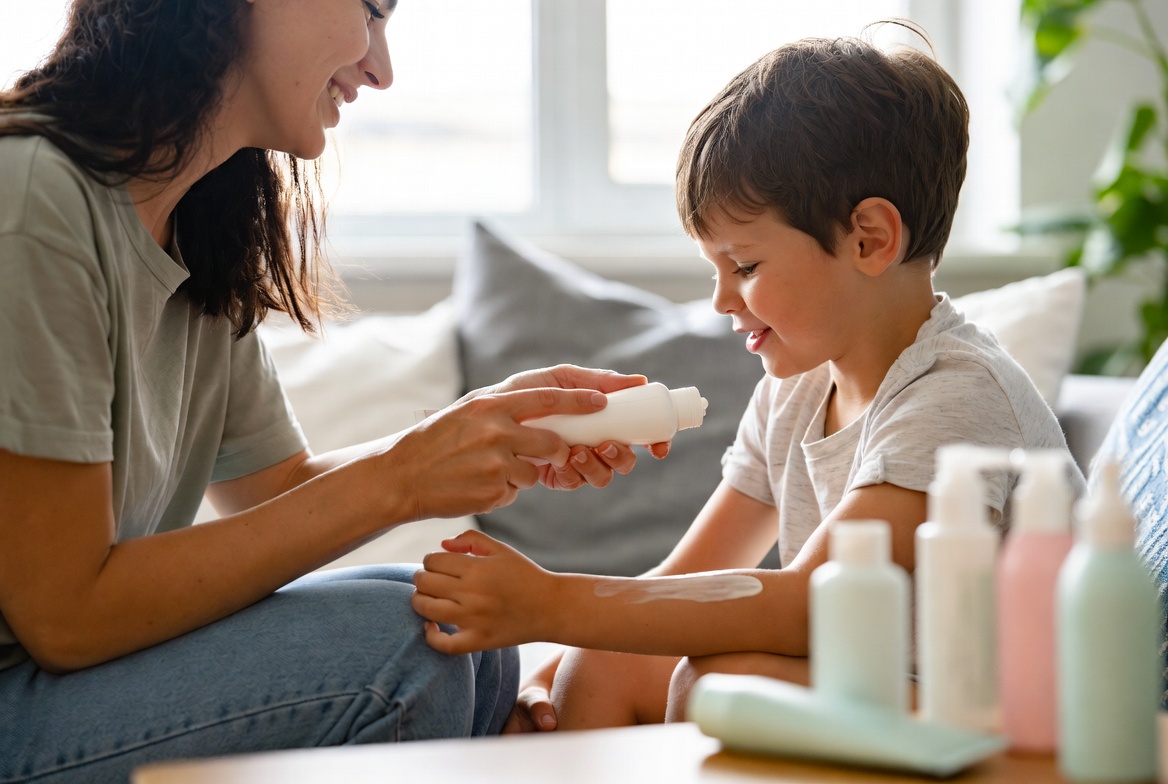
Last summer, I slathered what I thought was a “gentle” sunscreen on my niece before a pool day. Within twenty minutes she had red, angry blotches across her shoulders and was scratching like crazy. That was the moment I realized that not all sunscreens marketed for kids are actually safe for children with sensitive skin. Finding the right one takes a little more digging.
The good news is that the best sunscreens for children’s sensitive skin do exist, and once you know what to look for, you will never go back to guessing. This guide breaks down the top picks, what makes them different, and everything you need to know before you buy.
If You’re in a Hurry, Start Here
- Blue Lizard Kids Mineral Sunscreen SPF 50+ — The gold standard for reactive skin; it turns pink in UV light, which kids actually think is cool.
- Thinkbaby Safe Sunscreen SPF 50+ — Clean ingredients, thick but effective, and built specifically for little ones with sensitivity issues.
- Badger Kids Sunscreen Cream SPF 40 — Only five ingredients, certified organic, and about as gentle as it gets.
The Best Sunscreens for Children’s Sensitive Skin, Reviewed
1. Blue Lizard Kids Mineral Sunscreen SPF 50+
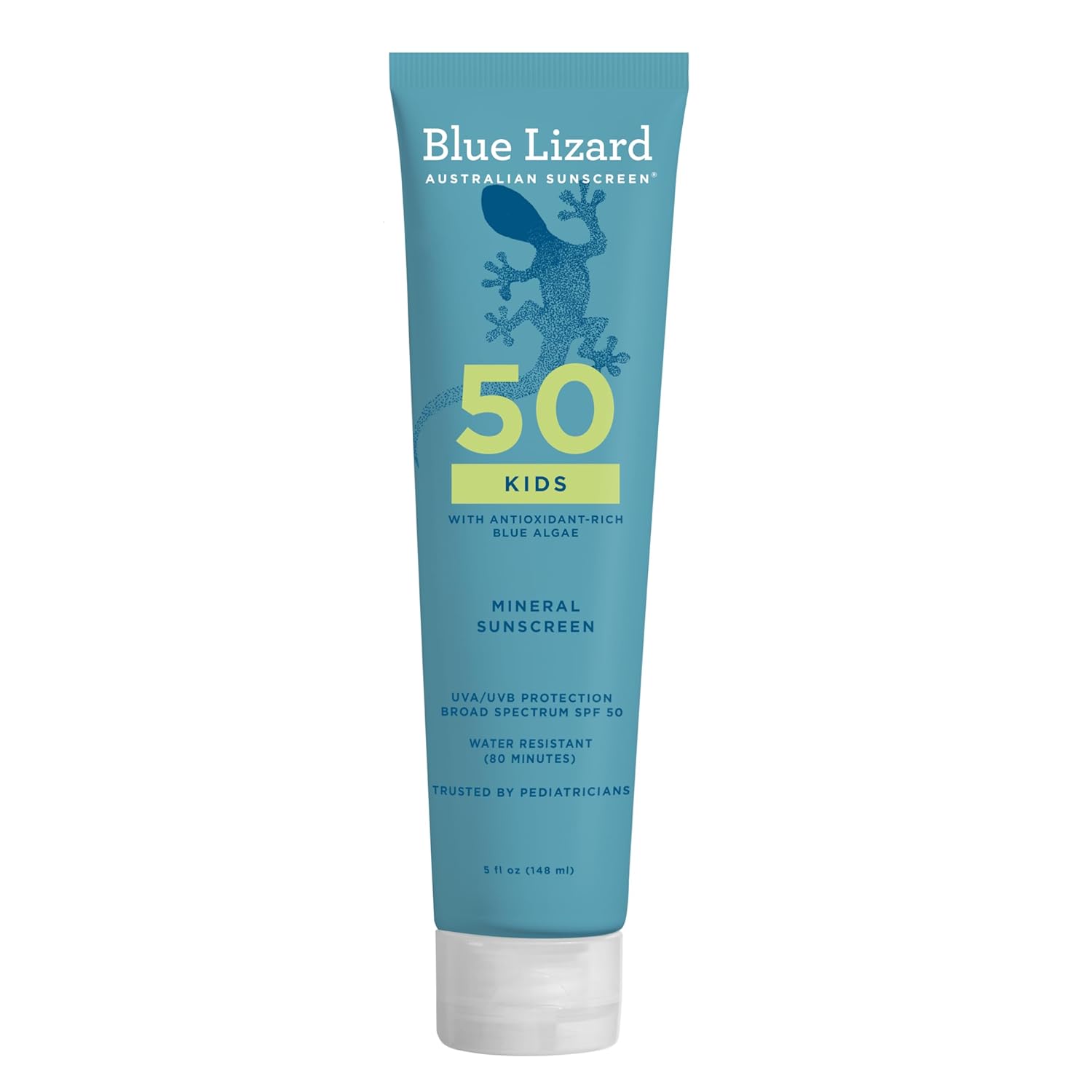
If there is one sunscreen I would hand to every parent of a sensitive-skinned child without hesitation, it is this one. Blue Lizard uses only zinc oxide and titanium dioxide as active ingredients, which means no chemical filters that can irritate delicate skin. The formula is free of fragrance, parabens, and oxybenzone, which are three of the biggest culprits behind skin reactions in kids.
What makes it genuinely fun is the smart bottle cap. It changes color from white to pink when exposed to UV rays, giving you a real-time reminder that the sun is out and protection is needed. Kids love the gimmick, and parents love the peace of mind. It rubs in reasonably well for a mineral formula, though you will notice a slight white cast on deeper skin tones.
The SPF 50+ rating gives you solid broad-spectrum coverage, and it is water resistant for up to 80 minutes, which matters if your kids are in and out of the pool all afternoon. For children who have broken out from other sunscreens, this is usually the one that finally works.
What We Love
- Only zinc oxide and titanium dioxide as active ingredients
- Free from fragrance, parabens, oxybenzone, and octinoxate
- UV-sensing cap changes color as a fun visual reminder
- 80-minute water resistance
- Broad-spectrum SPF 50+ coverage
- Gentle enough for babies 6 months and older
Worth Knowing
- Leaves a noticeable white cast, especially on darker skin tones
- Thicker texture requires more rubbing to blend in fully
2. Thinkbaby Safe Sunscreen SPF 50+
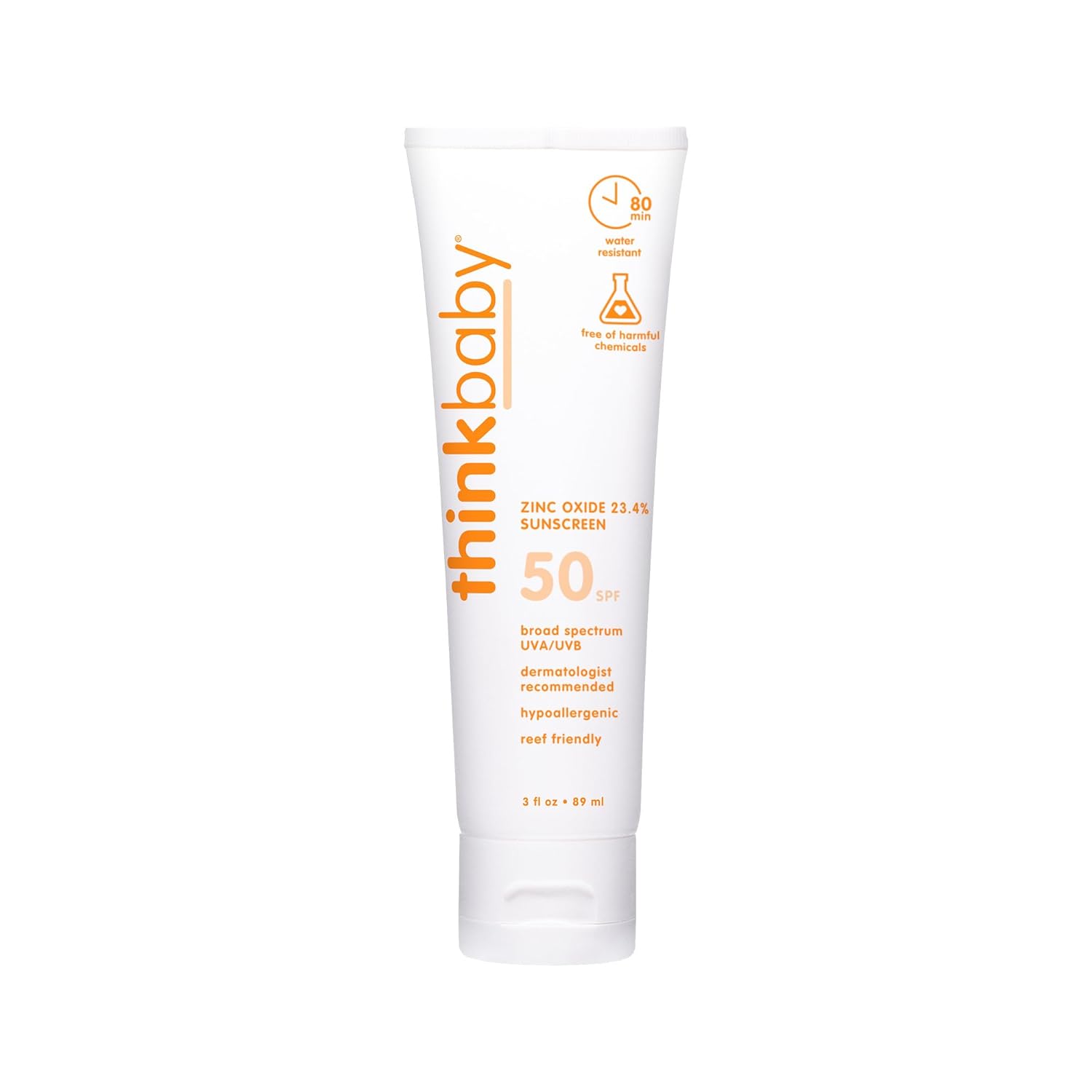
Thinkbaby was one of the first brands to pass the Environmental Working Group’s strict standards for sunscreen safety in kids’ products, and it has held that reputation ever since. The formula uses zinc oxide as its only active ingredient and skips all the harsh chemicals that tend to cause reactions. It is thick, it is creamy, and it smells like absolutely nothing, which is a real plus for kids who are sensitive to scents.
This one is especially good for children who have had reactions to even mineral sunscreens before. The inactive ingredients list is clean and simple, and the product is free from PABA, phthalates, parabens, biologically harmful chemicals, and UV chemical absorbers. It was designed with the idea that what goes on your child’s skin matters just as much as the SPF number on the bottle.
Application takes a bit of patience since the thick consistency does not spread like a lotion. Warm it between your palms first and apply in small sections. Water resistance holds up to 80 minutes, making it solid for beach days and swim lessons.
What We Love
- Single mineral active ingredient (zinc oxide)
- Free from a very long list of harmful chemicals
- No fragrance, no parabens, no phthalates
- 80-minute water resistance
- EWG verified for safety
Worth Knowing
- Very thick texture that can be hard to spread quickly on a wiggly child
- Leaves a white cast that lingers on the skin
- Pricier per ounce than some conventional options
3. Badger Kids Sunscreen Cream SPF 40
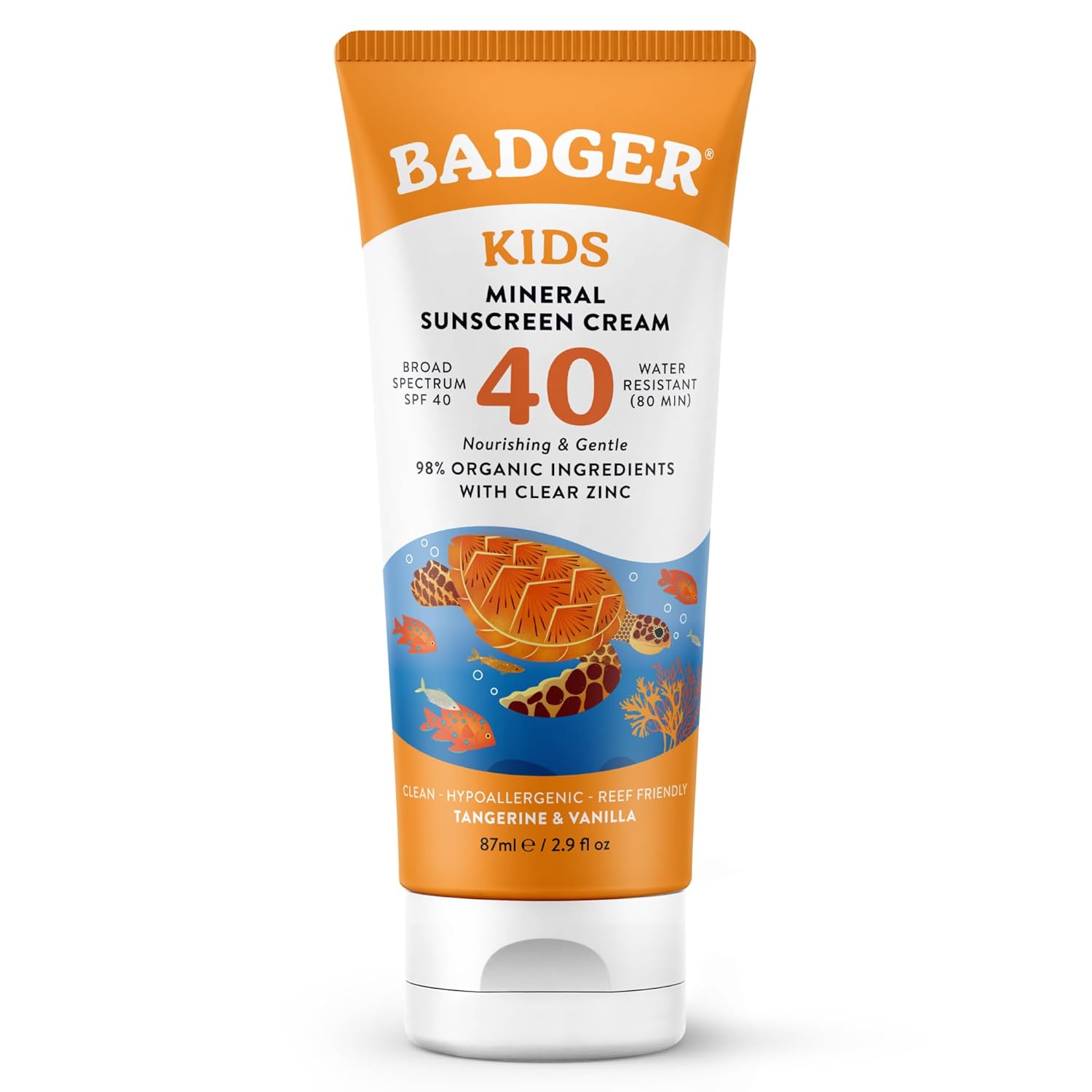
Badger is the brand you reach for when you want the absolute simplest ingredient list possible. The kids’ formula has only five active and inactive ingredients: zinc oxide, sunflower oil, beeswax, castor oil, and seabuckthorn extract. That is it. No long chemical names you cannot pronounce, no hidden fragrances, no synthetic anything. For children with eczema or extremely reactive skin, fewer ingredients almost always mean fewer problems.
The texture is more of a balm than a lotion, so it goes on a little differently. Think of it like a tinted, slightly greasy layer that you rub in firmly. The slight orange tint from the seabuckthorn can look funny on very fair skin at first, but it fades as it absorbs. The upside is that it gives you a visual guide for coverage, so you can see exactly where you have applied it and where you have missed.
SPF 40 is slightly lower than the others on this list, but it is still solid daily protection. It is water resistant for 40 minutes, so it works well for playground days and casual swim time rather than long beach sessions where you would want to reapply more frequently. Badger is also a certified B Corporation and uses organic ingredients throughout.
What We Love
- Only five total ingredients, incredibly clean formula
- Certified organic by the USDA
- Great for eczema-prone and extremely reactive skin
- Visual application guide from the natural orange tint
- No synthetic chemicals of any kind
Worth Knowing
- Orange tint can be alarming at first application
- Only 40-minute water resistance versus 80 minutes on other top picks
- Balm-like texture is harder to apply on squirming kids
4. CeraVe Mineral Sunscreen Lotion SPF 50
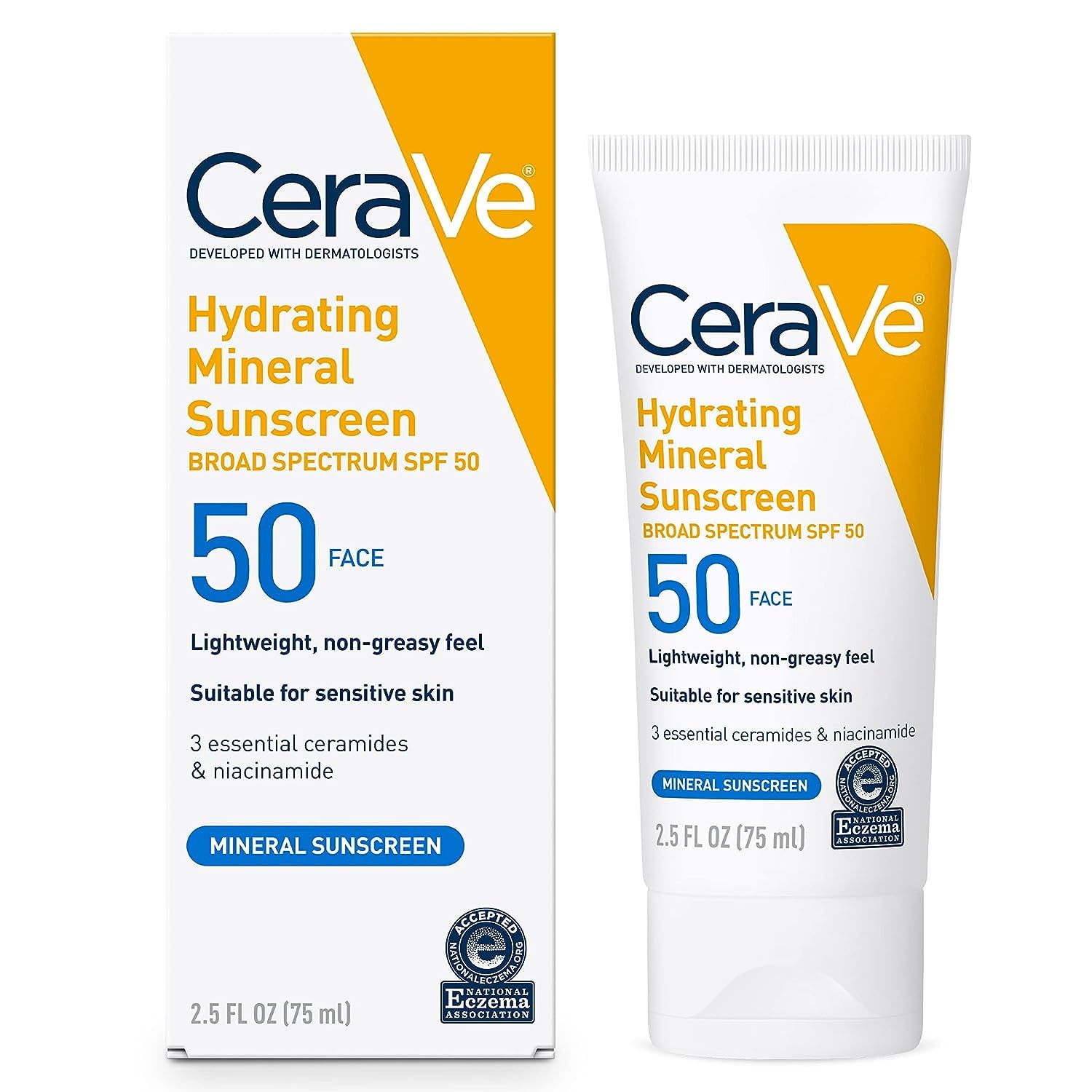
CeraVe built its entire brand on the idea that skincare should be gentle and barrier-supporting, and the mineral sunscreen lives up to that. It contains three essential ceramides that help strengthen the skin’s moisture barrier, which is genuinely helpful for children whose sensitive skin tends to dry out or become irritated. The formula is fragrance-free, non-comedogenic, and developed with dermatologists.
Unlike some thicker mineral options, this one has a slightly more fluid texture that blends more easily. The white cast is present but lighter than some competitors, which makes it a bit more practical for everyday use and for kids with medium to olive skin tones. It also absorbs relatively quickly, which is a lifesaver when you are trying to get sunscreen on before school or sports practice.
The downside for very sensitive skin is that it does contain a couple more inactive ingredients than the ultra-minimalist options above. Most kids tolerate it beautifully, but if your child reacts to practically everything, you might want to patch test first. It is also not certified organic, though it is free from common irritants like fragrance and parabens.
What We Love
- Contains three ceramides for skin barrier support
- Fragrance-free, paraben-free, and non-comedogenic
- Easier to apply than thicker mineral formulas
- Dermatologist developed and tested
- SPF 50 broad-spectrum protection
Worth Knowing
- More inactive ingredients than ultra-clean options
- Not specifically formulated as a kids’ product
- Patch test recommended for the most reactive skin types
5. Neutrogena Pure and Free Baby SPF 50
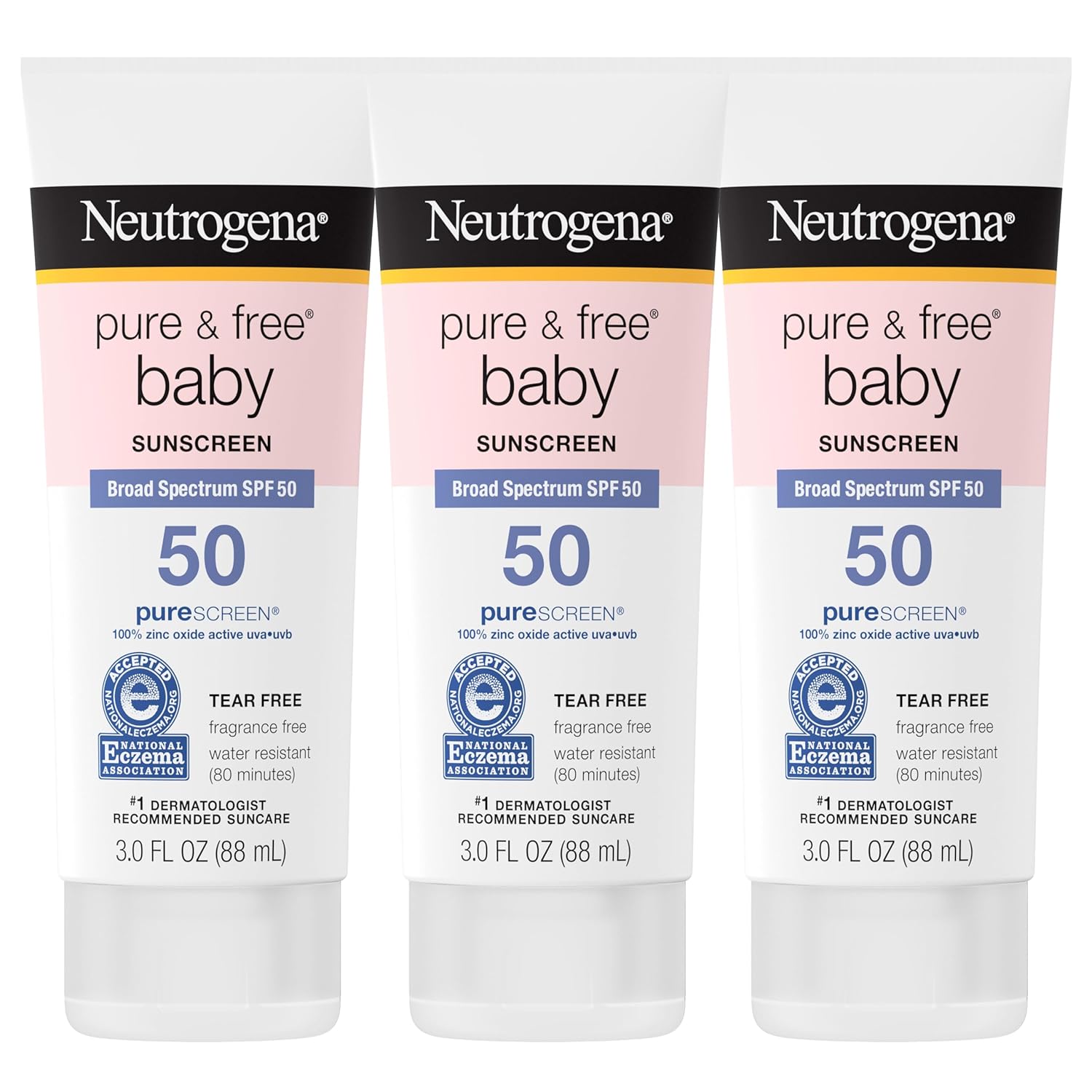
Neutrogena has been around long enough to know what parents need, and the Pure and Free Baby formula reflects that. It uses titanium dioxide and zinc oxide together, which gives it good broad-spectrum coverage while keeping the formula free from fragrance, parabens, and PABA. It is specifically designed for babies and toddlers, so it tends to be gentler than the brand’s adult sunscreens.
The lotion texture is thinner and more manageable than some of the other mineral options, which makes it a practical everyday pick. It blends fairly well for a mineral formula and does not leave quite as thick a residue. Water resistance is 80 minutes, which covers most outdoor activities without needing an immediate reapplication.
It is not the most minimalist formula, and parents who prefer certified organic or ultra-clean products may prefer Badger or Thinkbaby. But for families who want a trusted, widely available option that works for sensitive and baby skin without a massive price tag, this one delivers. It is easy to find in stores as a bonus.
What We Love
- Dual mineral actives for solid broad-spectrum coverage
- Free from fragrance, parabens, and PABA
- Thinner texture that is easier to apply quickly
- 80-minute water resistance
- Widely available and reasonably priced
Worth Knowing
- Not a certified organic formula
- Some parents find the white cast still fairly pronounced
- Inactive ingredient list is longer than ultra-clean mineral options
6. Aveeno Baby Continuous Protection Zinc Oxide Mineral Sunscreen SPF 50
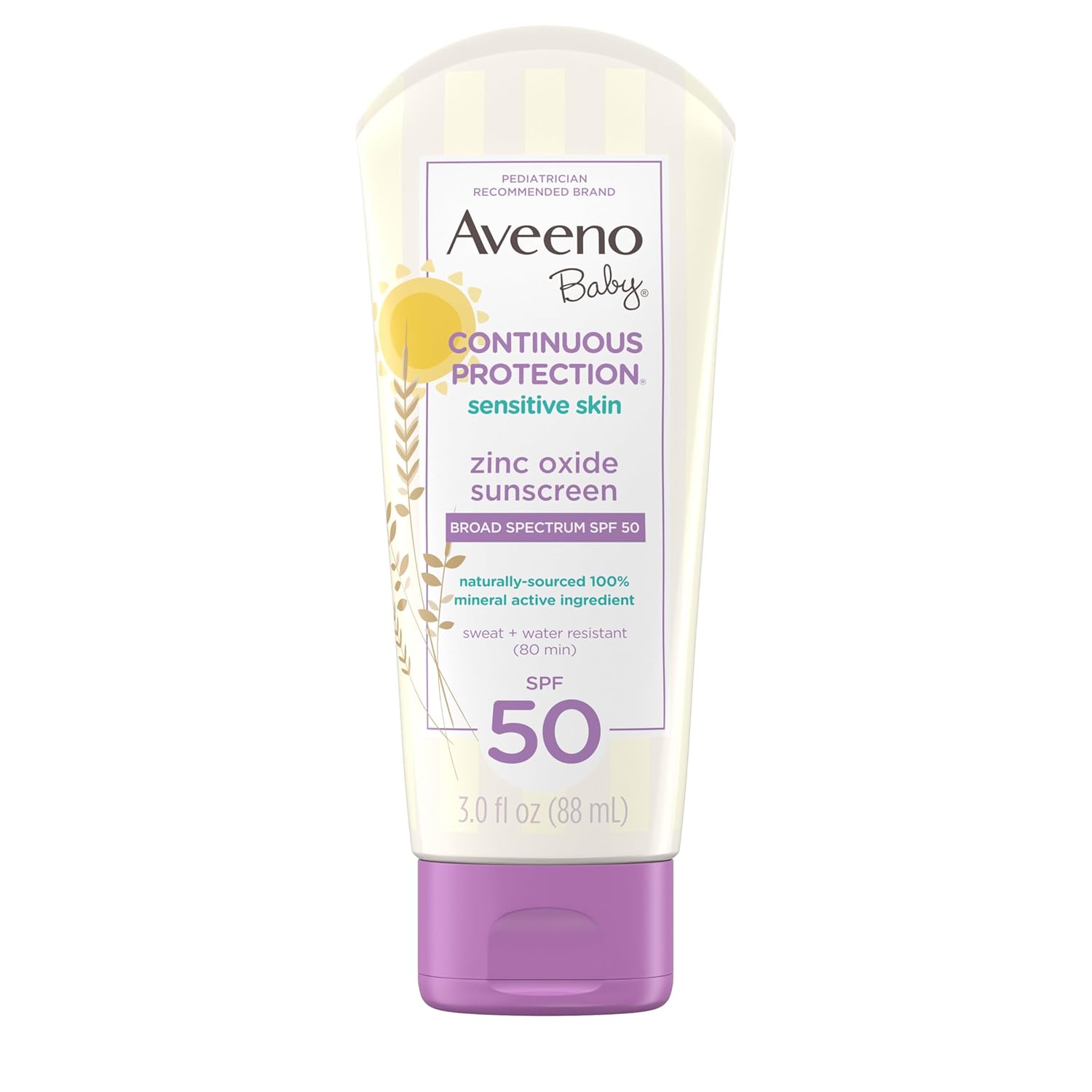
Aveeno has long been associated with oat-based formulas that calm irritated skin, and the baby mineral sunscreen follows that same philosophy. The formula includes colloidal oatmeal, which is clinically proven to soothe sensitive and eczema-prone skin, plus zinc oxide as the active mineral filter. For children who deal with chronic skin sensitivity, that combination can actually be actively calming rather than just neutral.
The texture is creamy and moisturizing, which makes it a good pick for drier climates or for kids whose skin tends to feel tight and flaky. It blends reasonably well and does not feel heavy on the skin once it is in. Fragrance-free, hypoallergenic, and tested by pediatric dermatologists, it checks a lot of boxes for parents who are cautious about ingredients.
It is worth noting that the moisturizing formula means it does not feel as lightweight as some options, and in very humid weather it can feel a bit sticky. Still, for children with dry and sensitive skin who are going outdoors daily, having a sunscreen that moisturizes at the same time is a real convenience.
What We Love
- Contains colloidal oatmeal, known for soothing sensitive and eczema-prone skin
- Zinc oxide mineral protection with SPF 50
- Fragrance-free and hypoallergenic
- Tested by pediatric dermatologists
- Doubles as a moisturizer
Worth Knowing
- Can feel sticky in hot, humid weather
- Not an ultra-minimalist formula
- White cast is present like most mineral options
7. Coppertone Pure and Simple Baby SPF 50
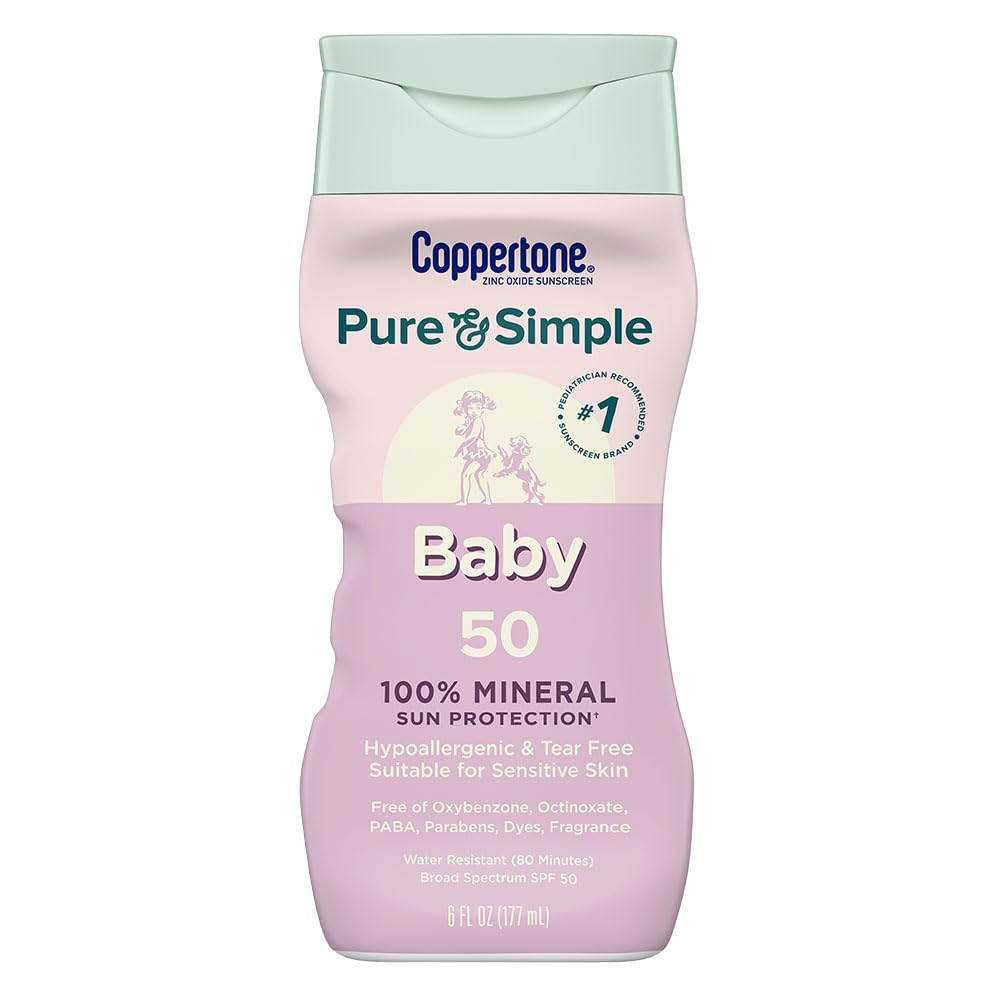
Coppertone Pure and Simple is designed for parents who want a conventional brand they recognize with a cleaner ingredient list than the standard sunscreen. The formula is free from fragrance, parabens, phthalates, and the chemical filters that are most often linked to reactions in sensitive skin. Zinc oxide is the only active ingredient, keeping it firmly in mineral territory.
This is a solid middle-ground option. It is not as meticulously clean as Badger or Thinkbaby, but it is far gentler than a standard Coppertone formula. The lotion consistency is easy to work with, and it goes on without too much resistance. It is also one of the more affordable mineral options for kids, which matters when you are applying and reapplying to multiple children through a long outdoor day.
For most children with mild to moderate sensitivity, this works well and without incident. For kids with severe reactions or diagnosed skin conditions like eczema, you may want to step up to one of the cleaner picks higher on this list. But as an everyday school bag or sports bag staple, it is a practical, dependable choice.
What We Love
- Zinc oxide only, no chemical UV filters
- Free from fragrance, parabens, and phthalates
- Easy lotion texture that applies without much effort
- More affordable than most clean mineral options
Worth Knowing
- Not as clean as ultra-minimalist brands
- Better for mild sensitivity than severe reactions
- White cast is standard for a mineral formula
What Actually Matters When Choosing the Best Sunscreens for Children’s Sensitive Skin
1. Mineral vs. Chemical Actives
Chemical sunscreens work by absorbing UV rays and converting them to heat, while mineral sunscreens sit on top of the skin and reflect UV light away. For sensitive skin, mineral formulas are almost always the better choice because they are less likely to cause irritation, stinging, or allergic reactions. Zinc oxide, in particular, is one of the mildest and most well-tolerated ingredients in skincare.
2. Fragrance Is the Enemy
Fragrance is one of the most common triggers for contact dermatitis and skin reactions in children. Even products labeled “natural” can include fragrance components that cause problems. Always check for “fragrance-free” rather than “unscented,” because unscented products can still contain masking fragrances that counteract a smell rather than eliminating it.
3. Water Resistance Duration
No sunscreen is truly waterproof, but water resistance ratings of 40 or 80 minutes matter a lot when kids are swimming or sweating. An 80-minute rating gives you a longer window before you need to reapply, which is more practical for active outdoor days. Check the label rather than assuming, since ratings vary even within the same brand.
4. Ingredient Transparency and Certifications
Certifications like EWG Verified, USDA Organic, or B Corporation status give you independent confirmation that a brand has been held to higher standards. They are not the only measure of quality, but they are a useful shortcut when you are comparing options and do not want to read a chemistry dissertation on every bottle.
5. SPF Number and Broad-Spectrum Coverage
SPF 30 blocks about 97% of UVB rays, while SPF 50 blocks around 98%. The difference sounds small, but for fair-skinned or very sensitive children, that extra margin matters on long outdoor days. Always look for “broad-spectrum” on the label, which means the formula protects against both UVA and UVB rays, not just sunburn-causing UVB.
Do You Actually Need a “Kids” Sunscreen, or Can You Use an Adult Formula?
This is the question nobody answers directly, so here it is straight. Many adult mineral sunscreens are perfectly safe for children, especially if they use only zinc oxide, are fragrance-free, and have a short ingredient list. Brands like CeraVe and Neutrogena make adult formulas that dermatologists regularly recommend for kids with sensitive skin.
The real difference with “kids” sunscreens is usually marketing, packaging, and sometimes a slightly gentler inactive ingredient list. Here is what to actually watch for regardless of adult or kid labeling:
- Avoid oxybenzone, avobenzone, octisalate, octocrylene, homosalate, and octinoxate in kids’ products
- Look for zinc oxide as the primary or sole active ingredient
- Check for “fragrance-free,” not just “unscented”
- Shorter ingredient lists generally mean fewer potential irritants
- Skip anything with alcohol high on the ingredient list as it dries out sensitive skin
So no, you do not always need a product with “baby” or “kids” on the label. But you do need to read the label carefully and choose based on ingredients rather than branding.
So, Which One Should You Go With?
If your child has truly reactive, easily irritated skin, start with Blue Lizard Kids or Thinkbaby. Both have clean ingredient lists, strong water resistance, and a solid track record with sensitive-skin kids. If you want the most minimal formula humanly possible, Badger is your answer. And if budget is a factor or you want something easy to find locally, Neutrogena Pure and Free Baby or Coppertone Pure and Simple are solid, accessible choices.
The most important thing is getting something on their skin before they go outside, every single time. Even the best sunscreen does nothing sitting in a cabinet. Find the one your child tolerates well, keep it somewhere visible, and make reapplication a non-negotiable part of outdoor days.
Your Questions, Answered
1. At what age can I start using sunscreen on my child?
Most dermatologists and pediatricians recommend avoiding sunscreen on babies under six months old and keeping them out of direct sun instead. From six months onward, mineral sunscreens with zinc oxide are generally considered safe for regular use.
2. How often should I reapply sunscreen on my kids?
Reapply every two hours, and immediately after swimming or heavy sweating, regardless of the water resistance rating on the bottle. Set a timer if you need a reminder; it is easy to lose track at the beach.
3. Is SPF 30 enough for children with sensitive skin?
SPF 30 provides solid protection and is appropriate for most situations. For very fair-skinned children or those prone to burning quickly, SPF 50 gives you a slightly larger safety margin on long outdoor days.
4. Why does my child’s sunscreen leave a white cast?
Mineral sunscreens, especially those with a higher concentration of zinc oxide, leave a white residue because they sit on top of the skin rather than absorbing into it. This is normal and actually a sign the active ingredient is present and working.
5. Can sunscreen cause a rash even if it says it is for sensitive skin?
Yes, it can. Even products marketed for sensitive skin may contain an ingredient your child reacts to. When trying a new sunscreen, do a small patch test on the inner arm and wait 24 hours before applying it all over.
6. Are spray sunscreens safe for children with sensitive skin?
Spray sunscreens carry an inhalation risk, particularly for young children. Most dermatologists recommend sticking with lotions or creams for kids, especially for facial application. If you do use a spray, apply it to your hands first and then rub it on.
7. What is the difference between UVA and UVB protection?
UVB rays cause sunburn, while UVA rays penetrate more deeply and contribute to aging and long-term skin damage. Broad-spectrum sunscreens protect against both, which is why the broad-spectrum label matters and should always be a non-negotiable on any sunscreen you buy.
8. Can a child use the same sunscreen on their face and body?
Yes, as long as the formula is gentle enough. Some parents prefer a separate face sunscreen because facial skin tends to be more reactive and because kids touch their faces constantly. If the formula you are using is already very gentle, one sunscreen for both is completely fine.