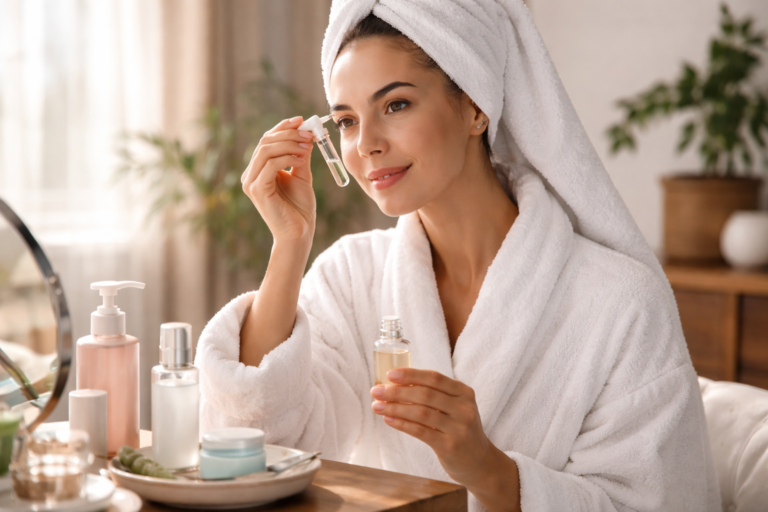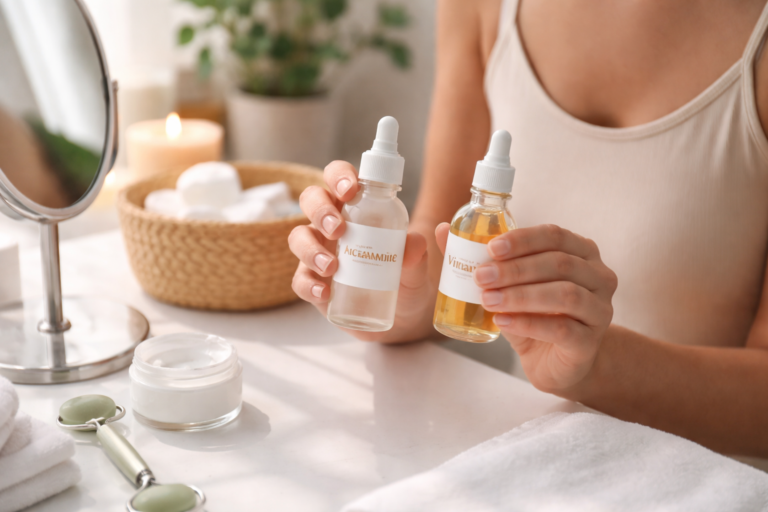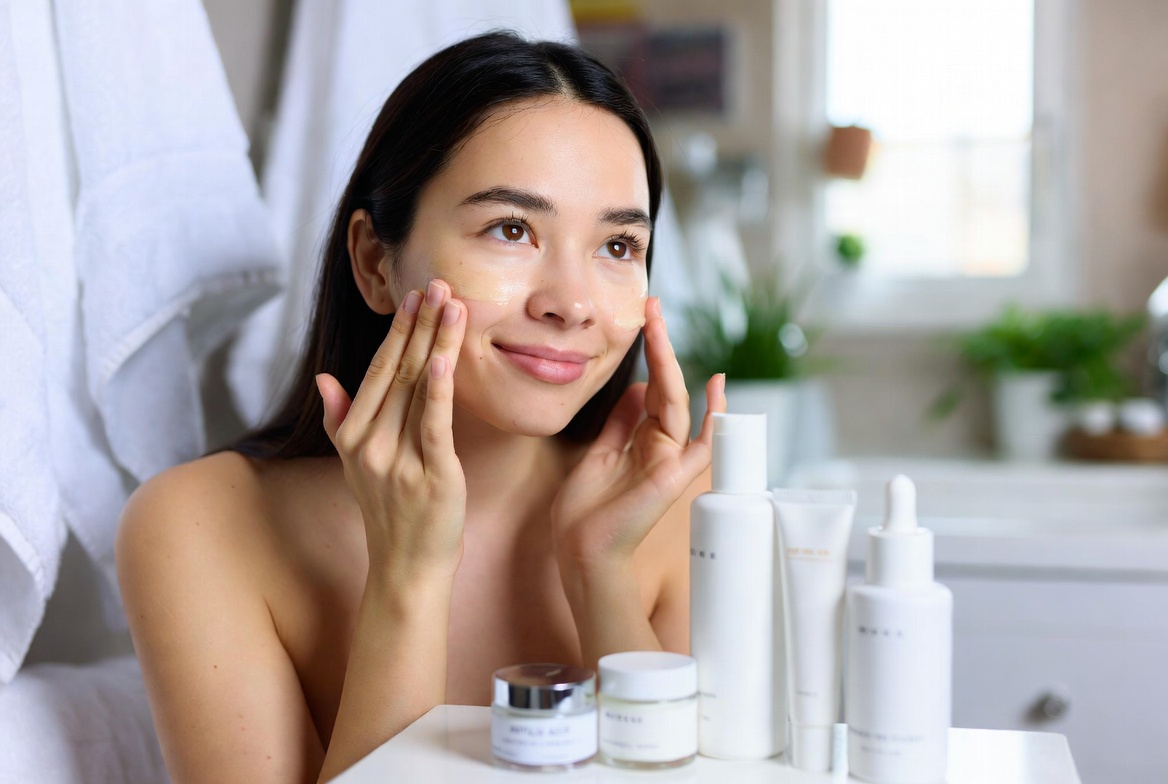
If your skin feels perpetually irritated, dry, or overwhelmed by products, you are not alone. A skin cycling routine was designed specifically for this problem.
Skin cycling is a structured approach to skincare where you rotate active ingredients across specific nights instead of using them every single day. The method was popularized by dermatologist Dr. Whitney Bowe and quickly gained traction because it actually makes sense for how skin behaves.
The core idea is simple. You give your skin strong actives when it can handle them, and then you give it time to recover. That balance is what makes a skin cycling routine worth sticking with.
Why Beginners Benefit Most from Skin Cycling
Most beginners make the same mistake. They buy a collection of active ingredients, use them all at once, and then wonder why their skin is red, flaky, and breaking out.
Skin cycling routine solves this by removing the guesswork. You follow a set schedule, use actives on designated nights, and protect your barrier on the others. It is structured, beginner-friendly, and backed by real dermatological logic.
It also helps you figure out which products your skin actually responds to, since you are not layering ten things at once.
The Classic 4-Night Skin Cycling Schedule
The standard skin cycling routine for beginners follows a four-night cycle that repeats continuously.
- Night 1: Exfoliation
- Night 2: Retinoid
- Night 3: Recovery
- Night 4: Recovery
After Night 4, you start again from Night 1. That is the whole framework. What changes is what you use each night and how you apply it.
Skin Cycling Routine: Breaking Down Each Night
Night 1: Exfoliation Night
What Exfoliation Does
Exfoliation removes dead skin cells from the surface, which helps other products absorb more effectively. It also unclogs pores, smooths texture, and brightens dull skin over time.
For skin cycling, chemical exfoliants work better than physical scrubs. They are more even, more controlled, and less likely to cause microtears.
Which Exfoliant to Use
- AHAs (alpha hydroxy acids) like glycolic acid or lactic acid work on the skin’s surface and are good for dryness, dullness, and uneven texture.
- BHAs (beta hydroxy acids) like salicylic acid penetrate into pores and are better for oily or acne-prone skin.
- PHAs (polyhydroxy acids) are the gentlest option and a great starting point if your skin is on the sensitive side.
Beginners should start with a low concentration. A 5% lactic acid or a 0.5% to 1% salicylic acid is enough to see results without overwhelming your skin.
Night 1 Routine Steps
- Cleanse with a gentle, non-stripping face wash.
- Apply your chemical exfoliant. Leave it on as directed, most do not need rinsing.
- Follow with a simple, hydrating moisturizer. No other actives tonight.
- Skip SPF at night, but apply it every morning without fail.
Night 2: Retinoid Night
Why Retinoids Are Central to Skin Cycling
Retinoids are vitamin A derivatives that speed up cell turnover, stimulate collagen production, and address concerns like fine lines, acne, and hyperpigmentation. They are among the most evidence-backed ingredients in skincare.
They also cause irritation, especially for beginners. That is exactly why skin cycling spaces retinoid use out instead of making it nightly.
Choosing a Retinoid as a Beginner
- Retinyl palmitate: The gentlest form. Good for very sensitive beginners.
- Retinol: The most widely available over-the-counter option. Start with 0.025% or 0.05%.
- Retinaldehyde: Stronger than retinol but gentler than prescription options.
- Tretinoin: Prescription only. Not recommended as a first retinoid.
Start low and go slow. The goal is not to use the strongest thing available. The goal is to use something consistently without destroying your skin barrier in the process.
Night 2 Skin Cycling Routine Steps
- Cleanse gently and pat your skin mostly dry, leaving it slightly damp.
- Apply a thin layer of moisturizer first if your skin is sensitive. This is called the sandwich method and reduces irritation significantly.
- Apply a pea-sized amount of retinoid to your entire face. That is all you need.
- Follow with another light layer of moisturizer to seal everything in.
Do not mix retinoids with your exfoliant. That combination is too aggressive and is exactly the kind of thing skin cycling is designed to prevent.
Night 3 and Night 4: Recovery Nights
What Recovery Nights Are For
Recovery nights in skin cycling routines exist to let your skin barrier rebuild after two nights of active ingredients. This is not filler time. It is when your skin actually does its repair work, and what you apply on these nights directly supports that process.
Think of recovery nights as maintenance. You are not treating a problem, you are protecting the progress you made on nights one and two.
What to Use on Recovery Nights
Focus on three things: hydration, barrier support, and nothing harsh.
- Ceramides: These are the lipids that make up your skin barrier. Using a ceramide-rich moisturizer on recovery nights gives your skin exactly what it needs to rebuild.
- Hyaluronic acid: A humectant that pulls water into the skin. Apply it on slightly damp skin before your moisturizer.
- Peptides: Supportive ingredients that help skin repair and firm over time. Gentle enough for recovery nights and worth including if your budget allows.
- Glycerin: Underrated and effective. A glycerin-based moisturizer is simple, affordable, and works well for barrier support.
- Niacinamide: Calms inflammation, supports ceramide production, and is gentle enough to use during recovery. A solid addition for most skin types.
What to Avoid on Recovery Nights
- Retinoids
- Exfoliating acids
- Vitamin C serums (save these for the morning routine instead)
- Benzoyl peroxide
- Strong alcohol-based toners
If a product has the word “treatment” on the label, it probably does not belong on a recovery night.
Night 3 and 4 Routine Steps
- Cleanse with your gentle face wash.
- Apply hyaluronic acid or a hydrating toner while skin is still slightly damp.
- Layer on a ceramide-rich moisturizer.
- If your skin feels particularly dry or compromised, add a thin layer of petroleum jelly or a barrier balm on top as an occlusive.
That is it. Simple on purpose.
Building Your Morning Routine Alongside Skin Cycling
Skin cycling is a nighttime framework. Your mornings stay consistent every day regardless of which night you are on.
A solid morning routine to pair with skin cycling looks like this:
- Broad-spectrum SPF 30 or higher every single morning
- Gentle cleanser or water rinse if your skin is dry
- Vitamin C serum for antioxidant protection (optional but useful)
- Moisturizer suited for your skin type
Sunscreen is especially critical when you are using retinoids and exfoliants. Both increase your skin’s sensitivity to the sun, and skipping SPF will undo a lot of the progress you are working toward.
Adjusting the Cycle for Your Skin Type
Sensitive or Dry Skin
Extend recovery nights to two or three nights each cycle instead of one. A six-night or eight-night cycle is completely valid if your skin needs more time between actives. There is no rule that says you must follow the classic four-night version.
On exfoliation night, start with a PHA or a very low-concentration lactic acid. Introduce retinoids slowly, using them every other cycle at first before committing to weekly use.
Oily or Acne-Prone Skin
Stick to the four-night cycle or even add an extra exfoliation night if your skin handles it well. BHA-based exfoliants like salicylic acid will serve you better than AHAs.
For recovery nights, opt for a lightweight gel moisturizer rather than a rich cream. Look for the label “non-comedogenic,” which means it is formulated not to clog pores.
Combination Skin
Follow the standard four-night cycle and pay attention to how different zones of your face respond. You may find your T-zone (forehead, nose, and chin) tolerates actives well while your cheeks need more caution.
Adjust product amounts accordingly rather than changing the whole cycle.
Common Mistakes Beginners Make with Skin Cycling
- Using too strong a retinoid too soon. Start with the lowest available concentration and build up over months, not weeks.
- Skipping recovery nights. These nights are not optional. They are what makes the active nights sustainable long-term.
- Adding extra actives on recovery nights. The point of recovery is simplicity. Adding serums and treatments defeats the purpose.
- Not wearing SPF in the morning. Retinoids and exfoliants both increase sun sensitivity. Daily SPF is non-negotiable when cycling.
- Expecting fast results. Skin cycling rewards patience. Most people notice real improvement after six to eight weeks of consistent cycling.
When to Reassess Your Routine
After four to six weeks, take stock of how your skin is responding.
If you are experiencing persistent irritation, redness, or peeling, extend your recovery nights and reduce the strength of your actives. Your skin is telling you it needs more time.
If your skin is handling everything well and you want to progress, you can try a slightly stronger retinoid concentration or a more potent exfoliant. Move slowly and change one thing at a time.
Frequently Asked Questions
1. What is a skin cycling routine for beginners?
A skin cycling routine for beginners is a structured four-night skincare schedule where you use exfoliants on Night 1, retinoids on Night 2, and focus on barrier recovery on Nights 3 and 4. It prevents overuse of actives and reduces irritation.
2. How often does the four-night cycle repeat?
Continuously. After completing Night 4, you start again from Night 1. The cycle runs on repeat indefinitely, adjusted as needed for your skin’s response.
3. Can beginners with sensitive skin try skin cycling?
Yes, but with modifications. Extend recovery nights, choose the gentlest actives available, and consider starting with a six-night or eight-night cycle instead of the classic four-night version.
4. Do I need expensive products to start skin cycling?
No. Affordable drugstore products work well for skin cycling. You need a gentle cleanser, a low-concentration exfoliant, a beginner retinoid, and a ceramide moisturizer. None of these need to be luxury items.
5. Can I do skin cycling if I have acne?
Yes. Skin cycling can actually help acne-prone skin by using exfoliants like salicylic acid on exfoliation night and retinoids on retinoid night, both of which are proven to help with acne. Recovery nights help prevent the irritation that often makes breakouts worse.
6. What if I miss a night in my skin cycling schedule?
Just pick up where you left off. Missing one night does not reset your progress. If you missed Night 2, use your retinoid the following night and continue from there.
7. When will I start seeing results from skin cycling?
Most beginners notice smoother texture and calmer skin within two to three weeks. Significant improvements in tone, lines, or acne typically take six to eight weeks of consistent cycling.
Conclusion
A skin cycling routine for beginners works because it respects how skin actually functions. It gives you the benefits of powerful actives without the constant irritation that comes from using them every day. Start with the four-night cycle, choose gentle products, and prioritize your recovery nights as much as your active ones. Give it eight weeks, stay consistent, and let the cycle do the work.