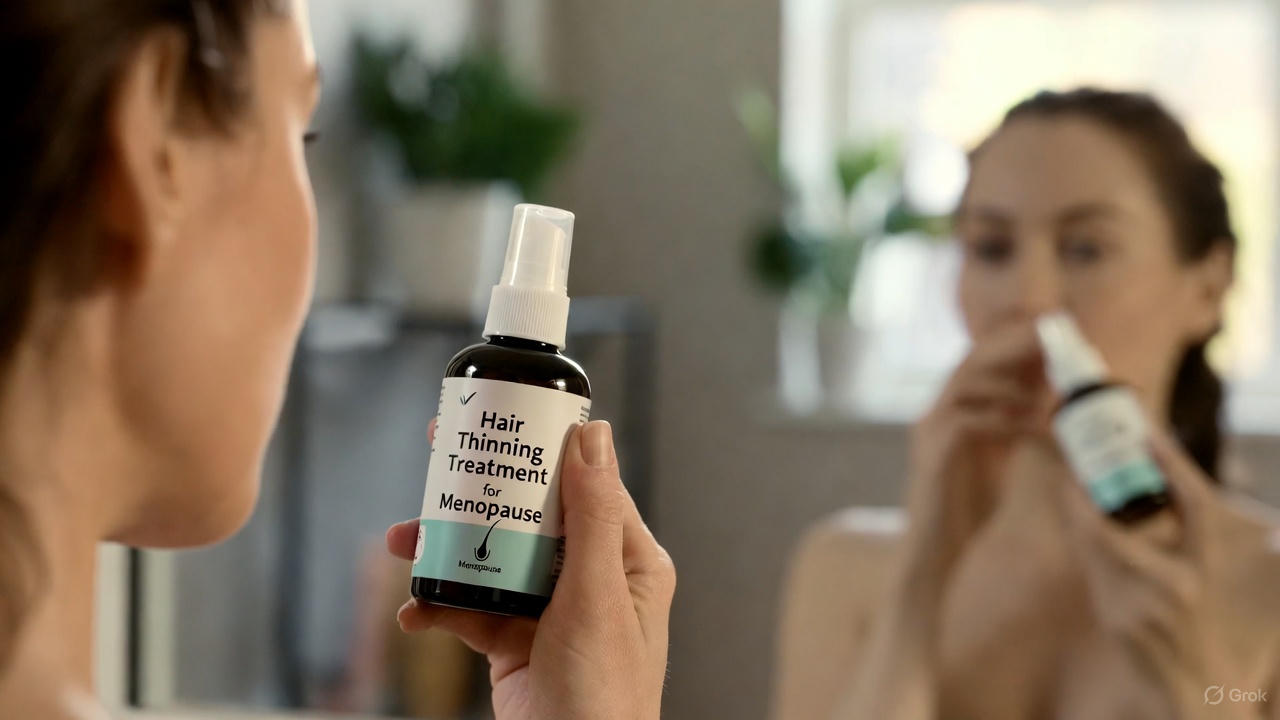
The hormonal rollercoaster of menopause often leads to noticeable hair thinning, plus that can feel like a major hit to your self-confidence. Fortunately, you don’t have to just accept it.
Finding the best hair thinning treatments for menopause is a huge step toward fighting back. These treatments are specifically designed to address the underlying hormonal shifts affecting your hair follicles.
Top Recommendations
- Best Overall: Women’s Rogaine 5% Minoxidil Topical Foam
- Best for Botanical Power: évolis Professional Reverse Activator
- Best Comprehensive Supplement: Nutrafol Women’s Balance Capsules
Product Reviews
1. Women’s Rogaine 5% Minoxidil Topical Foam

Women’s Rogaine 5% Minoxidil Topical Foam is widely considered the gold standard and is one of the best hair thinning treatments for menopause because it contains the only FDA-approved ingredient for female pattern hair loss: Minoxidil.
The foam application is designed to be easy to use and dries quickly, which is a major advantage for daily styling. Its primary action is increasing blood flow to the scalp, which provides the follicles with more oxygen and nutrients. It works best when used consistently and early in the thinning process.
The biggest factor with Rogaine is commitment; you must use it daily to maintain results. If you stop, any hair growth achieved will likely shed within a few months. However, its clinically proven efficacy makes it the go-to choice for serious intervention.
Pros:
- Contains Minoxidil, the only FDA-approved ingredient for female hair loss.
- Clinically proven to regrow hair and improve density.
- Easy-to-use foam formula that dries quickly.
- Suitable for long-term daily use.
Cons:
- Must be used continuously to maintain results.
- Some users may experience initial temporary shedding.
Women’s Rogaine 5% Minoxidil Topical Foam is the benchmark among the best hair thinning treatments for menopause. Its clinically proven Minoxidil formula is ideal for women seeking the most reliable and direct treatment for significant hormonal hair loss.
2. évolis Professional Reverse Activator
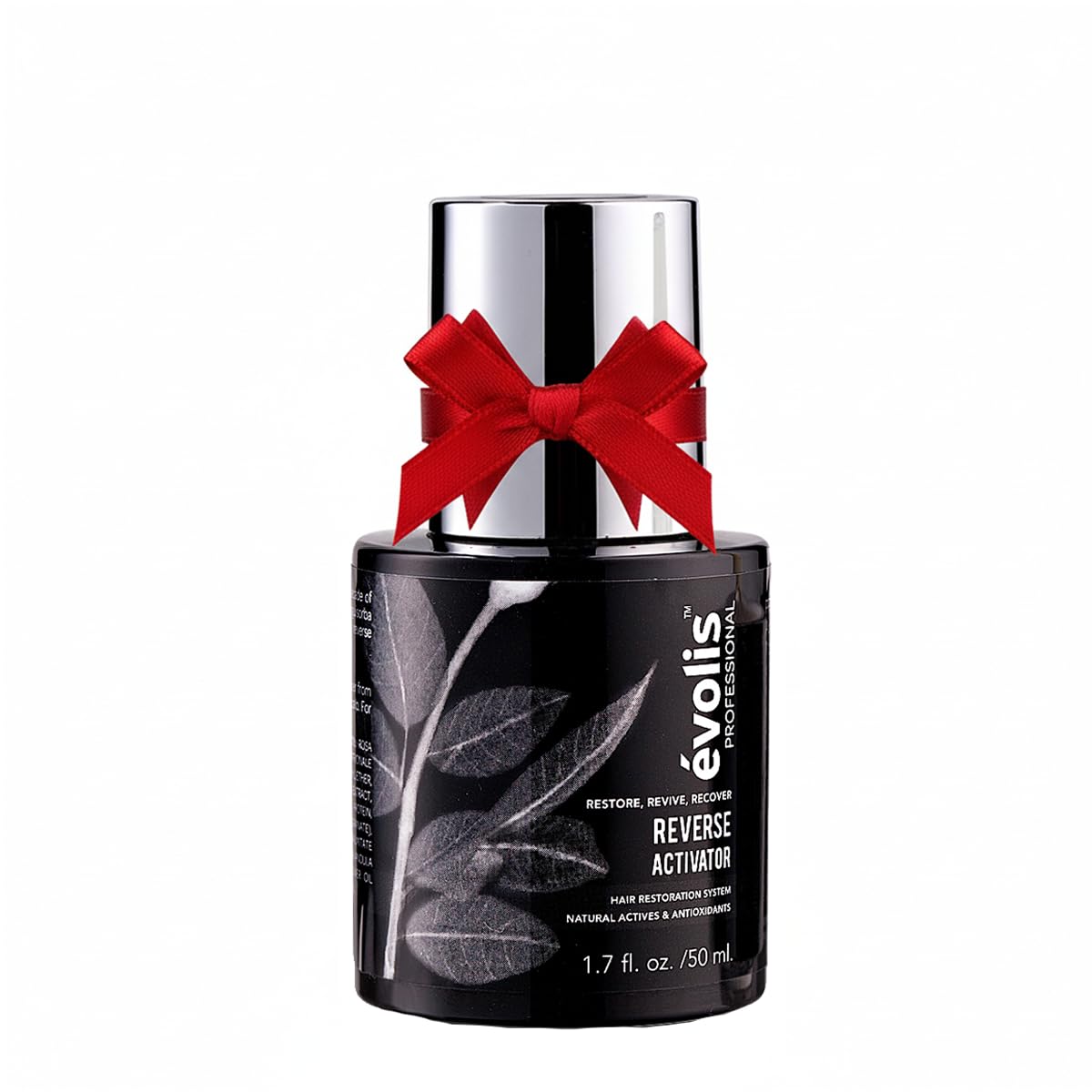
The évolis Professional Reverse Activator offers a scientifically advanced, yet botanical approach, making it a powerful contender in the category of best hair thinning treatments for menopause.
This topical serum is formulated with a proprietary blend of botanicals that work to extend the hair’s Anagen (growth) phase, plus it features keratin and wheat proteins to strengthen existing hair.
The key to the évolis treatment is its focus on signaling pathways in the hair follicle. It aims to reduce the rate of hair loss and encourages growth cycles to start faster. The treatment is lightweight, non-greasy, and applied directly to the scalp, which is a big plus because it won’t interfere with your styling.
While it is not a Minoxidil product, many women prefer this gentler, plant-based route, plus its results are highly praised in clinical studies conducted by the brand. It addresses the hormonal component by working to counteract the shortening of the growth phase.
Pros:
- Proprietary blend of powerful Australian botanicals.
- Extends the hair’s Anagen (growth) phase for more growth time.
- Non-greasy, lightweight serum that’s easy to incorporate into a routine.
- Focuses on reducing hair loss rate and increasing hair quality.
Cons:
- Premium price point compared to mass-market options.
- Must be applied twice daily for best results.
The évolis Professional Reverse Activator is one of the best hair thinning treatments for menopause for women seeking a highly effective, scientifically-backed, botanical serum. It works by extending the growth phase while delivering essential strength to the hair.
3. Nutrafol Women’s Balance Capsules

Nutrafol Women’s Balance is an internal supplement designed to target the multiple root causes of hair thinning, making it a unique and comprehensive choice among the best hair thinning treatments for menopause.
This formula is specifically tailored for women experiencing thinning during peri- and post-menopause. It targets stress, environmental toxins, and, crucially, hormone shifts.
The proprietary blend includes medical-grade botanicals that act as adaptogens to help regulate stress hormones like cortisol, plus plant-based components that address the hormonal imbalance caused by the decline in estrogen.
Key ingredients include Sensoril Ashwagandha and Saw Palmetto, a known DHT inhibitor. This holistic approach recognizes that thinning is rarely just one issue.
While the results aren’t instant, over several months, women report not only thicker, fuller hair but also improvements in sleep and reduced stress, thanks to the adaptogenic ingredients.
Pros:
- Targets multiple root causes: hormones, stress, and environment.
- Specifically formulated with ingredients for menopausal women.
- Contains Saw Palmetto to inhibit DHT.
- Users often report secondary benefits like better sleep and less stress.
Cons:
- Requires taking four capsules daily, which can be difficult to maintain.
- High price point for a monthly supply.
Nutrafol Women’s Balance is one of the best hair thinning treatments for menopause for a holistic approach, tackling hormonal shifts and stress from the inside out. It’s a comprehensive option for those willing to commit to an internal regimen.
4. Pura D’Or 4-in-1 Biotin Premium Serum
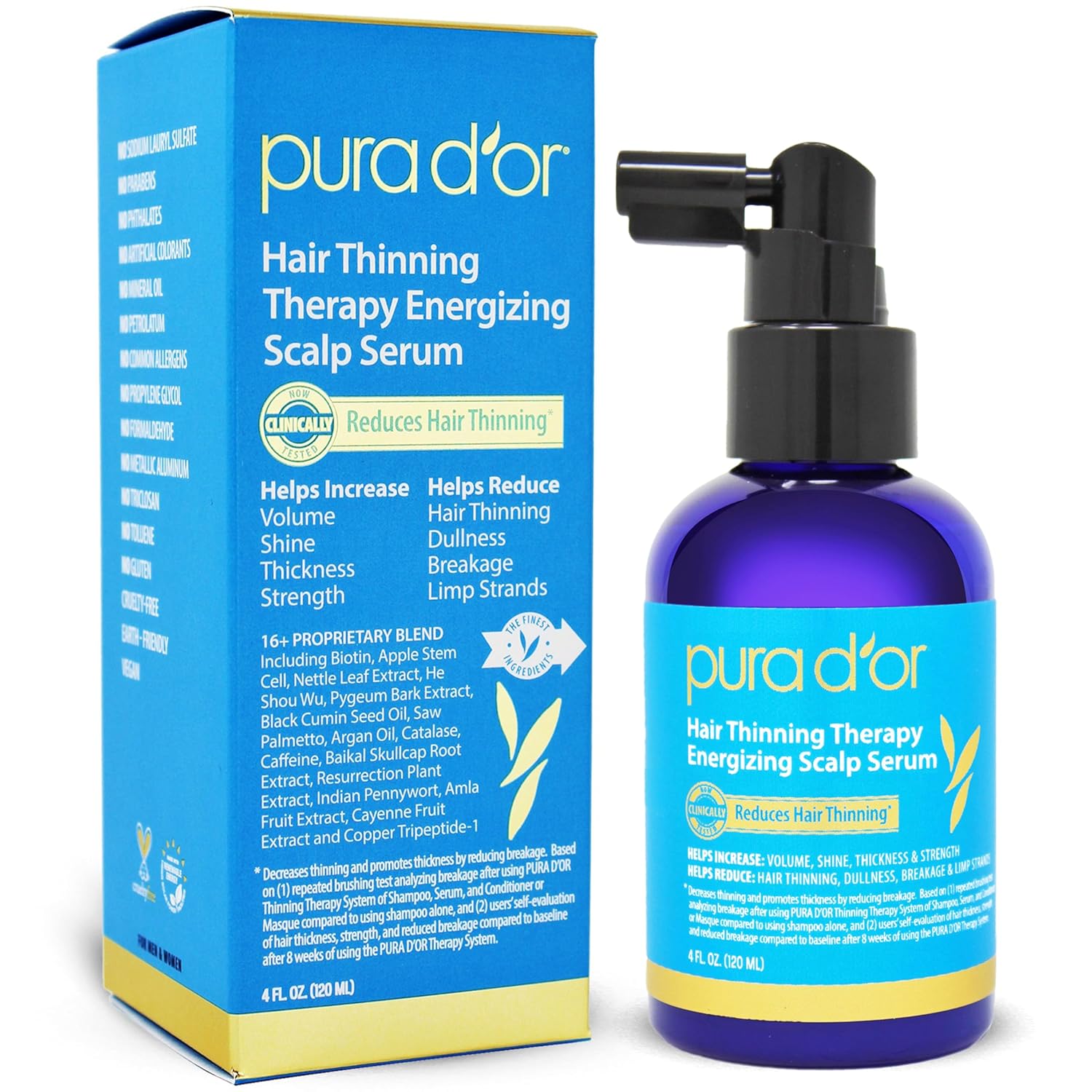
Pura D’Or’s 4-in-1 Biotin Premium Serum is an excellent option for women who want a leave-in topical treatment rich in natural ingredients. It is formulated with 16 active ingredients designed to strengthen the hair, reduce breakage, and stimulate the scalp.
The “4-in-1” refers to its ability to thicken, reduce thinning, volumize, and protect the hair. This serum is completely drug-free, relying instead on a potent cocktail of natural ingredients like Niacin, Biotin, plus botanical extracts. I
It acts as a supporting treatment to maximize the health of the existing hair, minimizing the hair that is lost to breakage. Because it’s a leave-in product, those stimulating ingredients stay on the scalp for a longer period, maximizing their opportunity to work.
The serum is lightweight, plus it has an easy pump dispenser for targeted application. It is important to note that while it provides fantastic nourishment and strength, it does not contain the potent drug-based growth stimulant, Minoxidil. This makes it a perfect choice for women with mild to moderate thinning or for those looking to complement an existing oral treatment.
Pros:
- Drug-free formula rich in Biotin and Niacin.
- Reduces breakage and visibly improves hair density.
- Easy-to-use, non-greasy leave-in serum.
- Great value for the amount of active botanical ingredients.
Cons:
- Does not contain Minoxidil for clinical-level regrowth.
- Best suited for strengthening and prevention, rather than aggressive regrowth.
The Pura D’Or 4-in-1 Biotin Premium Serum is one of the best hair thinning treatments for menopause if you need a reliable, drug-free topical boost. It’s ideal for strengthening brittle hair and enhancing overall thickness naturally.
5. Keranique Hair Regrowth Treatment
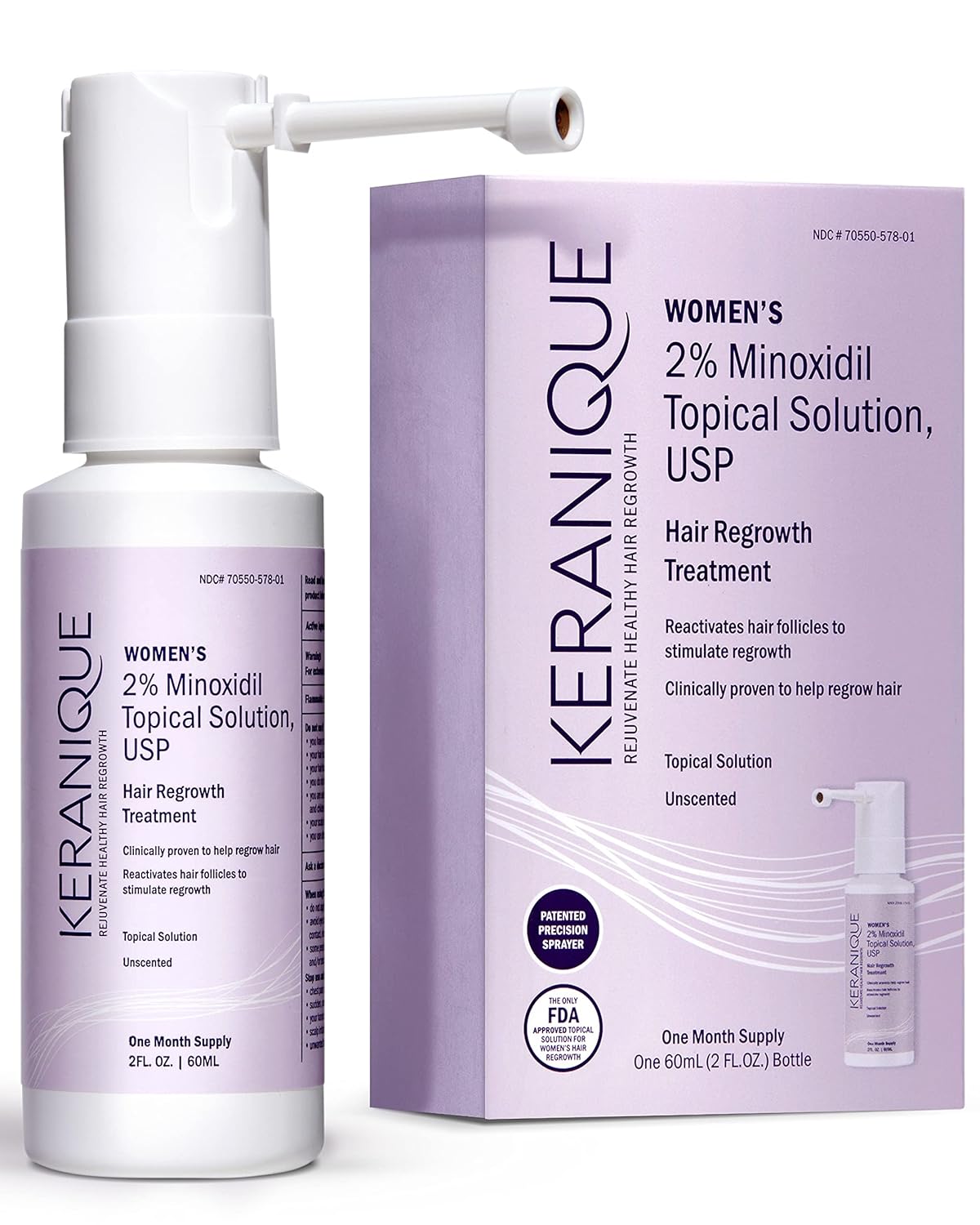
Keranique offers a dedicated solution for women with its Hair Regrowth Treatment, which also contains 2% Minoxidil. While the concentration is slightly lower than that of the Rogaine foam, it is still a clinically proven and effective ingredient that combats female pattern thinning often seen during menopause.
This product is a liquid application that comes with a spray applicator for targeted delivery to the scalp. It is formulated to be used twice daily. The key benefit is its direct action on the follicle: revitalizing it, stimulating circulation, and extending the hair’s active growth period.
However, the liquid base can sometimes feel slightly oilier than the foam versions, and you need to be very careful to apply it only to the scalp, not the hair strands. It’s a solid, reliable choice that focuses on the core problem.
Pros:
- Contains 2% Minoxidil, a clinically proven growth stimulant.
- Lower concentration may be gentler for sensitive scalps.
- Targets the root cause of hormonal follicle miniaturization.
- Easy spray application for precise dosing.
Cons:
- Requires twice-daily application for best results.
- The liquid can sometimes feel slightly heavy or greasy compared to foam.
The Keranique Hair Regrowth Treatment is one of the best hair thinning treatments for menopause for women who want a clinically proven Minoxidil solution but prefer a gentler 2% concentration. It’s a targeted liquid application for consistent, reliable regrowth.
6. Viviscal Pro Hair Growth Supplement
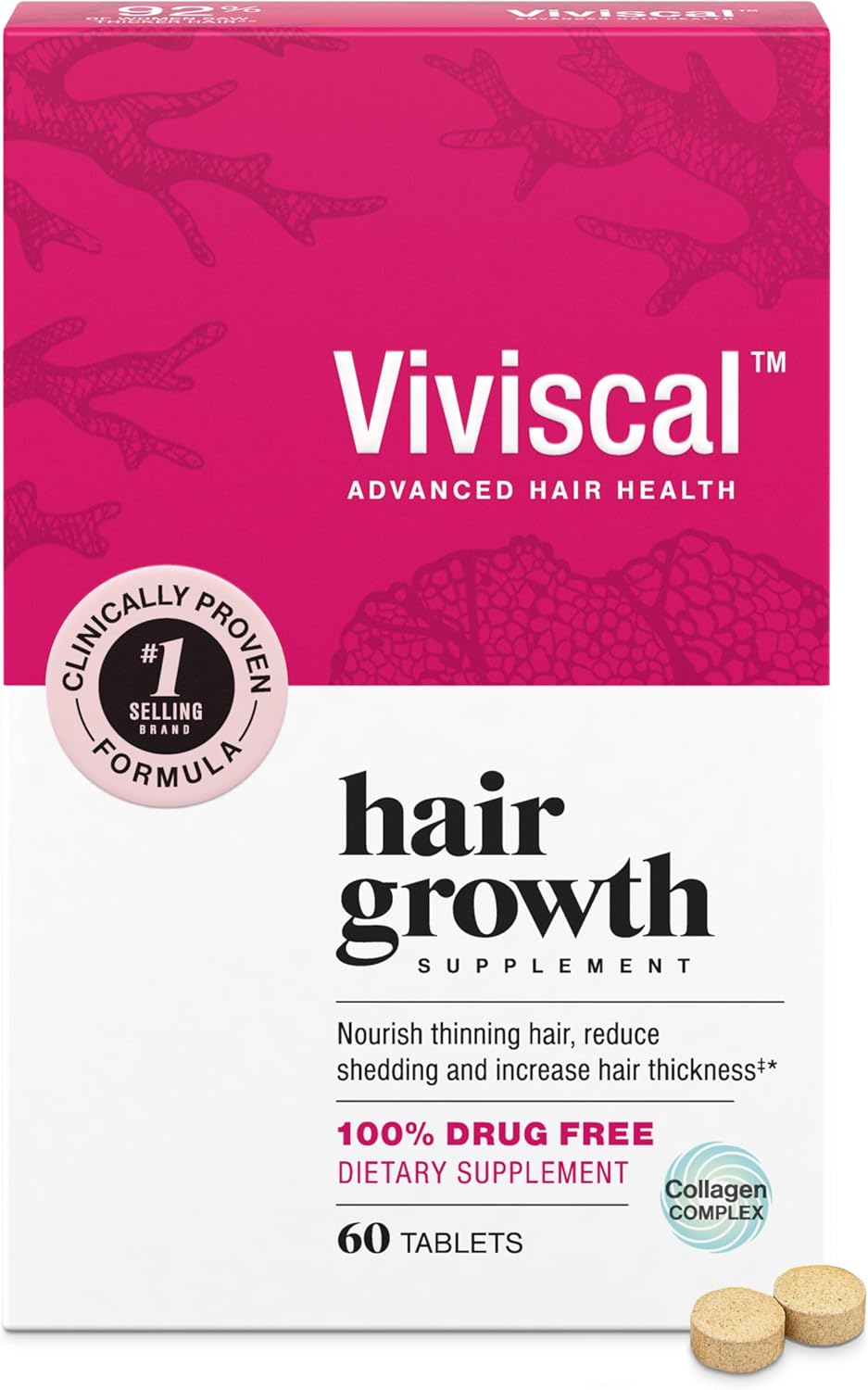
Viviscal Pro is a well-known name in internal hair thinning treatments for menopause because it’s a drug-free dietary supplement. Its core component is the proprietary AminoMar marine complex, which is a blend of marine proteins and polysaccharides.
This complex, combined with Biotin, Vitamin C, and Niacin, aims to nourish thinning hair and promote existing hair growth from within.
The science behind Viviscal Pro centers on providing the body with the key building blocks necessary for healthy hair production. It is a four-stage process that takes several months, starting with nourishment and ending with stronger, fuller hair.
The key commitment here is taking two tablets daily, once in the morning and once at night. While it doesn’t contain hormonal balancing ingredients like Saw Palmetto, its focus on marine protein nutrition makes it an excellent complementary therapy.
Pros:
- Contains the proprietary AminoMar marine complex for structural support.
- Drug-free internal supplement, often recommended by professionals.
- Rich in Biotin and Vitamin C to improve hair quality.
- Targets nutrient deficiencies that contribute to thinning.
Cons:
- Takes a minimum of six months to see full results.
- Requires taking two tablets daily for consistent efficacy.
Viviscal Pro is an ideal choice among the best hair thinning treatments for menopause if you prefer a drug-free, internal supplement focusing on marine protein nourishment. It’s excellent for strengthening existing hair and promoting healthy growth from within.
Buying Guide: How to Choose the Best Hair Thinning Treatments for Menopause
Selecting the right treatment for menopausal hair thinning can feel like a minefield, but knowing what to look for simplifies the process. The best choice depends on the severity of your thinning, your preferred method of treatment (topical vs. internal), and your commitment level. Here is a detailed breakdown of what to consider.
1. Ingredient Focus: Minoxidil vs. DHT Blockers vs. Nutrition
You need to decide how aggressive you want your treatment to be.
- For Aggressive Regrowth: Choose a treatment containing Minoxidil (2% or 5%). This is the only FDA-approved ingredient and has the strongest clinical backing for reversing pattern baldness. Pro tip: Start with 2% if you have a sensitive scalp, then move up to 5% if needed.
- For Hormonal Balancing: Look for ingredients that inhibit Dihydrotestosterone (DHT), such as Saw Palmetto, Pygeum Bark, or certain botanical extracts. These are crucial for addressing the hormonal trigger of menopausal thinning.
- For Structural Support: Opt for supplements rich in Biotin, Marine Proteins (like AminoMar), and Vitamins A, C, and D. These provide the necessary building blocks for thick, healthy hair.
2. Treatment Format: Topical vs. Internal
Your lifestyle and tolerance for daily application will guide this choice.
- Topical Treatments (Foams/Serums): Applied directly to the scalp, these are great for targeted action. Foams (like Rogaine) are often less messy and dry quickly. Serums may contain more concentrated botanicals. They require daily, consistent application.
- Internal Treatments (Supplements): These capsules work systemically to correct deficiencies and manage underlying factors like stress. They require remembering to take pills daily but avoid scalp residue. They are often best used in addition to a topical treatment for a comprehensive approach.
3. Commitment and Timeframe
Hair growth is slow, and these treatments are a long-term investment.
- Patience is Mandatory: No treatment works overnight. Be prepared to use the product diligently for at least 3 to 6 months before assessing its effectiveness.
- Long-Term Use: Treatments like Minoxidil require continuous use to maintain results. Understand the ongoing cost and commitment before you start. If you stop, you may lose the hair you regrew.
4. Scalp Health and Sensitivity
Check the ingredients list for potential irritants.
- Alcohol Content: Topical liquids, especially Minoxidil solutions, can sometimes contain alcohol, which can dry out the scalp. Foams are often less irritating.
- Scent and Residue: If you have fine hair, look for lightweight, non-greasy serums or quick-drying foams that won’t weigh down your hair or leave a heavy residue.
Conclusion
Finding the best hair thinning treatments for menopause is a proactive and empowering step toward regaining your confidence. Whether you choose the clinical reliability of Minoxidil, the holistic support of an internal supplement, or the targeted action of a botanical serum, the key to success is consistency.
Choose confidently, stick to your routine, and you’ll soon start to see that renewed volume and density come back.
Frequently Asked Questions
1. Can hormonal hair thinning from menopause be completely reversed?
While it is difficult to achieve a complete reversal back to your youthful density, the best hair thinning treatments for menopause can significantly halt the progression of thinning and stimulate substantial regrowth. Consistent use of clinically proven ingredients like Minoxidil, along with addressing nutritional and hormonal factors, can lead to noticeable improvements in hair fullness and density.
2. Is it better to use a topical treatment or an internal supplement for menopausal hair thinning?
The most effective approach is often a combination of both. Topical treatments, like Minoxidil, work directly on the scalp to stimulate the follicles, while internal supplements, like Nutrafol, address the root causes from within, such as nutrient deficiencies and hormonal stress. If you must choose one, pick the method that aligns best with the severity of your thinning and your lifestyle.
3. Will my hair fall out if I stop using a Minoxidil treatment?
Yes, if you stop using a Minoxidil-based treatment, the hair growth you achieved will likely shed, and your hair will return to its previous state of thinning within a few months. Minoxidil needs to be used continuously to maintain its effect, as it helps extend the hair’s growth phase, and that effect wears off when application ceases.
4. What are DHT blockers, and why are they important in treatments for menopausal hair thinning?
DHT blockers are ingredients, often botanical like Saw Palmetto, that inhibit the production or action of Dihydrotestosterone (DHT). DHT is a hormone derived from testosterone that is often responsible for shrinking hair follicles during hormonal shifts like menopause. Including these blockers in your hair thinning treatments for menopause is crucial for treating the root cause of the problem.
5. Can I use color and heat styling while using these hair thinning treatments?
Yes, you can typically continue coloring and heat styling your hair while using these treatments. However, it is essential to be gentle. Use a low-heat setting on styling tools and try to space out coloring sessions to reduce stress on your already fragile hair. Topical treatments should be fully absorbed before applying heat or color, usually within 15-20 minutes.