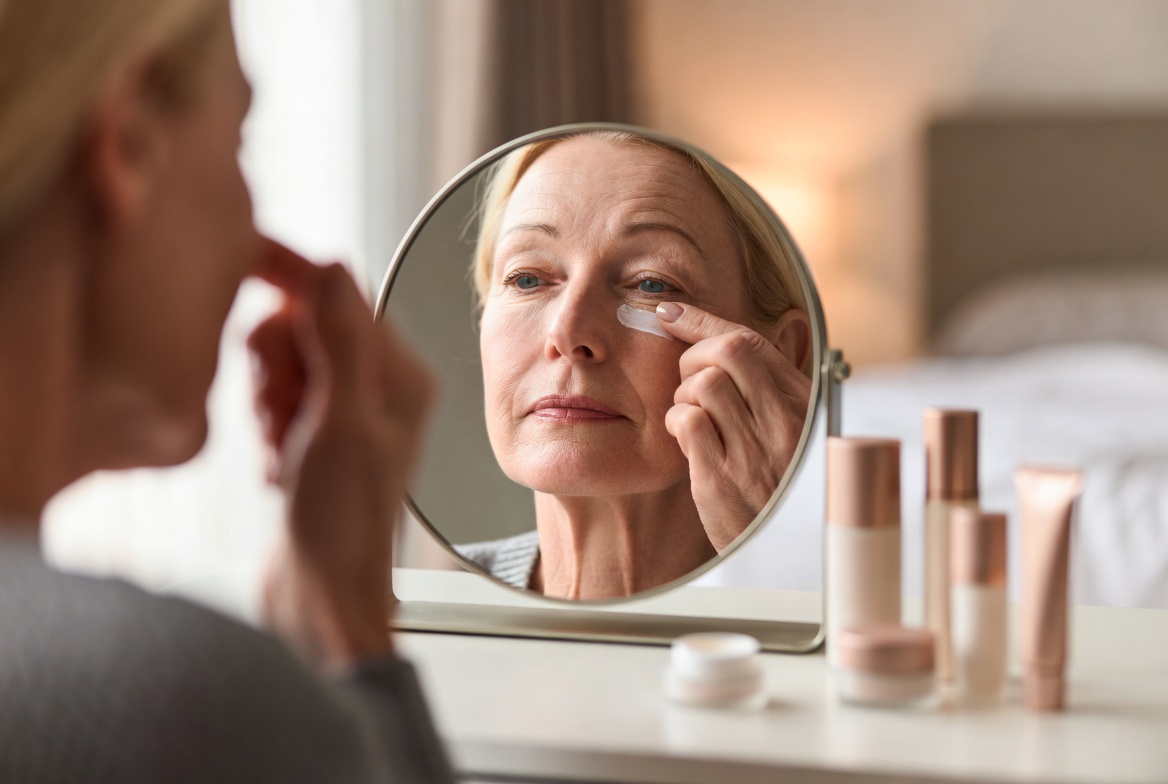
The skin around the eyes is the thinnest on the entire face, typically between 0.5 and 1 millimeter thick compared to 2 millimeters elsewhere. The best eye creams for crow’s feet are formulated specifically for this structural reality, using actives at concentrations gentle enough to avoid irritation while still being effective.
Crow’s feet, the fine lines radiating from the outer corners of the eyes, form through a combination of repetitive muscle movement, UV damage, and collagen loss.
This is a category where marketing language is particularly aggressive. Terms like “lifts,” “firms,” and “erases” are used freely, often without the ingredient evidence to support them. What the science actually supports is more modest but still meaningful: consistent use of targeted actives can measurably reduce the depth of fine lines and improve skin texture around the eye area over 8 to 12 weeks.
Understanding which ingredients cross from claim into clinical evidence, specifically retinol, peptides, caffeine, and ceramides, will help you make a purchase that reflects real biology rather than good photography.
At a Glance: 3 Recommended Picks
- Best Overall: RoC Retinol Correxion Eye Cream, the most clinically backed over-the-counter option for reducing crow’s feet with consistent use.
- Best for Puffiness and Fine Lines Together: Olay Eyes Ultimate Eye Cream, a peptide and niacinamide formula that addresses multiple eye area concerns simultaneously.
- Best for Sensitive Skin: CeraVe Eye Repair Cream, a gentle ceramide-rich formula that repairs the barrier without risk of irritation.
Best Eye Creams for Crow’s Feet: In-Depth Reviews
1. RoC Retinol Correxion Eye Cream
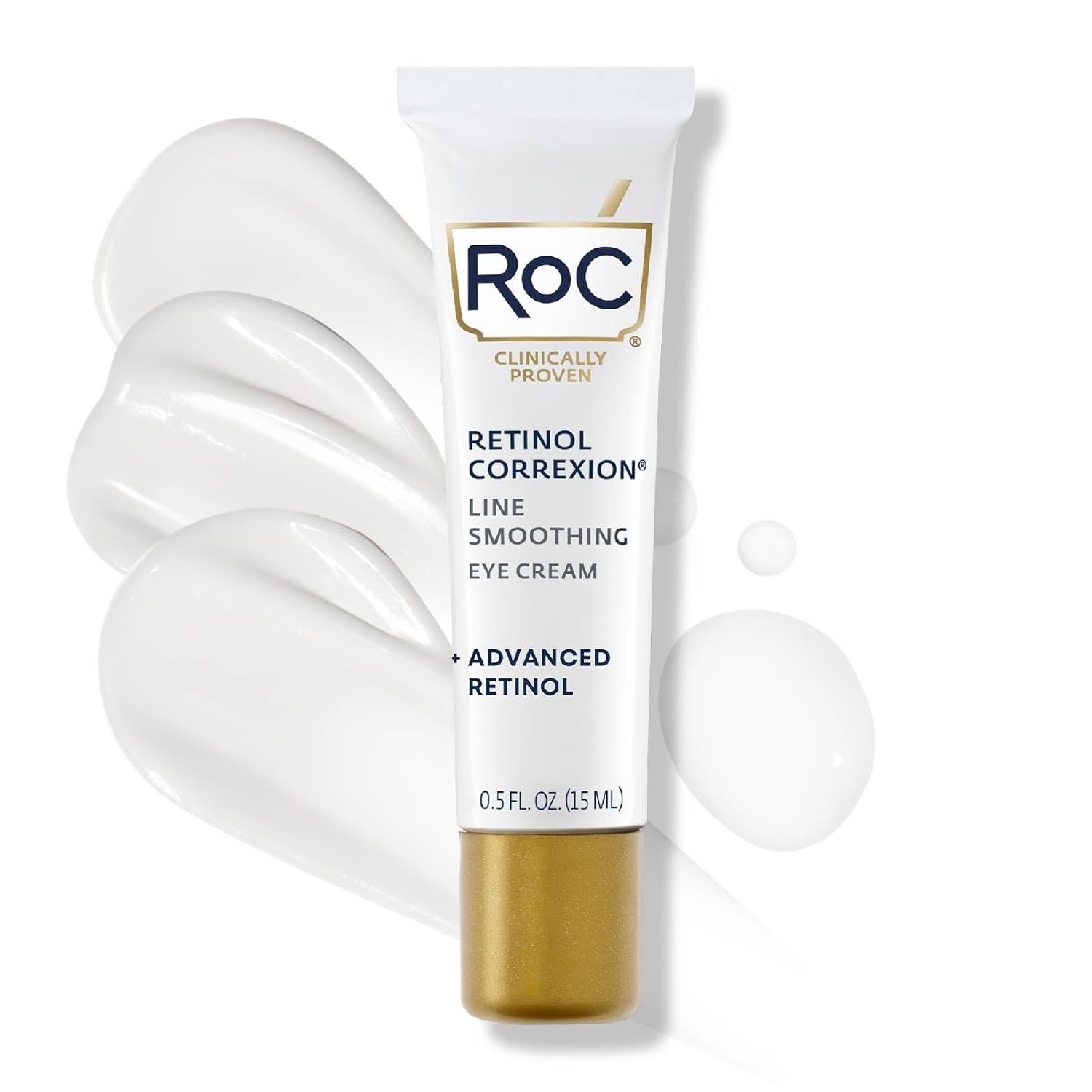
RoC’s Retinol Correxion Eye Cream applies the brand’s stabilized retinol technology specifically to the delicate periorbital area. Retinol stimulates collagen production and accelerates cell turnover in the skin, both of which directly address the structural changes causing crow’s feet. The formulation is adapted for the eye area with lower concentrations than face products and added moisturizing and soothing agents to reduce the risk of retinol-induced irritation.
The mineral-enriched formula helps offset the dryness that new retinol users often experience. The packaging is opaque and sealed to protect retinol stability, which is a critical practical detail. Retinol degrades rapidly in light and air, and poor packaging can render the active ingredient ineffective before you finish the tube.
Consistent use over 12 weeks produces measurable reductions in crow’s feet depth, as supported by the brand’s published clinical data. Independent dermatological research on retinol at the eye area is broadly consistent with these findings.
This is best for those committed to a retinol routine who want the most evidence-backed approach to reducing established crow’s feet.
Advantages
- Stabilized retinol in protective opaque packaging
- Formulated for the sensitive periorbital area
- Clinically tested for crow’s feet reduction
- Mineral-enriched formula to offset dryness
- Long market track record
Drawbacks
- Requires slow introduction to avoid irritation
- Not suitable during pregnancy without medical guidance
- Must be paired with daily SPF
2. Olay Eyes Ultimate Eye Cream
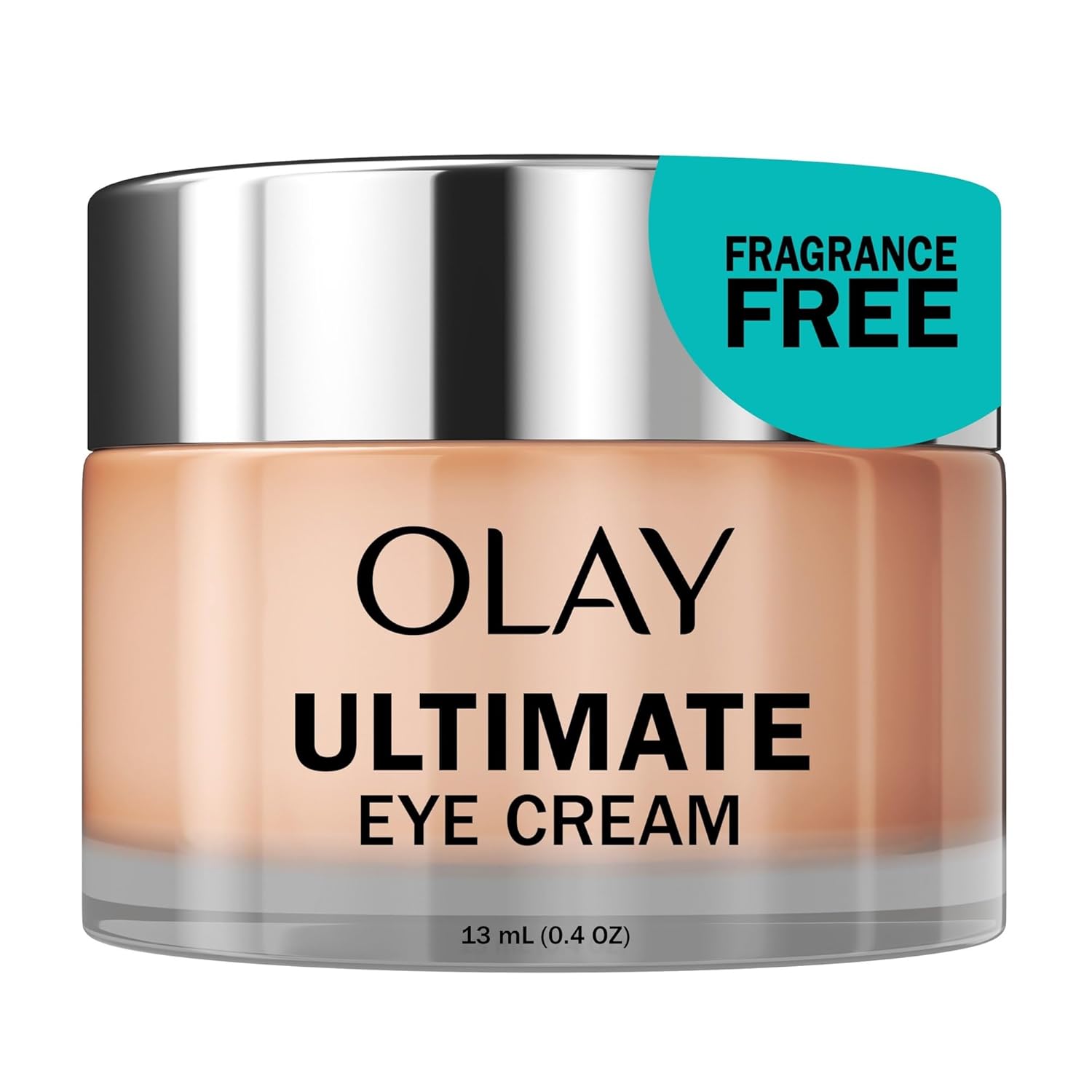
Olay’s Eyes Ultimate Eye Cream is designed to address three distinct concerns simultaneously: crow’s feet, dark circles, and puffiness. The formula combines peptide technology, niacinamide, and optical diffusers. Peptides signal the skin to increase collagen and elastin production. Niacinamide improves skin tone and reduces the appearance of dark circles. Optical diffusers are light-scattering particles that create an immediate visual softening of lines.
The texture is rich enough for dry under-eye skin but absorbs without leaving a heavy residue. The product can be used morning and evening, making it a practical one-product approach to multiple eye area concerns. It is fragrance-free and non-comedogenic, suits most skin types, and is less likely to cause milia (small white cysts) than very heavy eye creams.
For someone in their 40s dealing with the full range of under-eye concerns rather than exclusively crow’s feet, the multi-targeted approach of this product offers practical efficiency.
This is best for those who want a single eye cream that addresses lines, dark circles, and puffiness.
Advantages
- Peptides for collagen signaling
- Niacinamide for tone and dark circles
- Optical diffusers for immediate visual improvement
- Fragrance-free and non-comedogenic
- Suitable for morning and evening use
Drawbacks
- No retinol for deep collagen stimulation
- Optical diffusers are a cosmetic effect only, not structural
3. CeraVe Eye Repair Cream
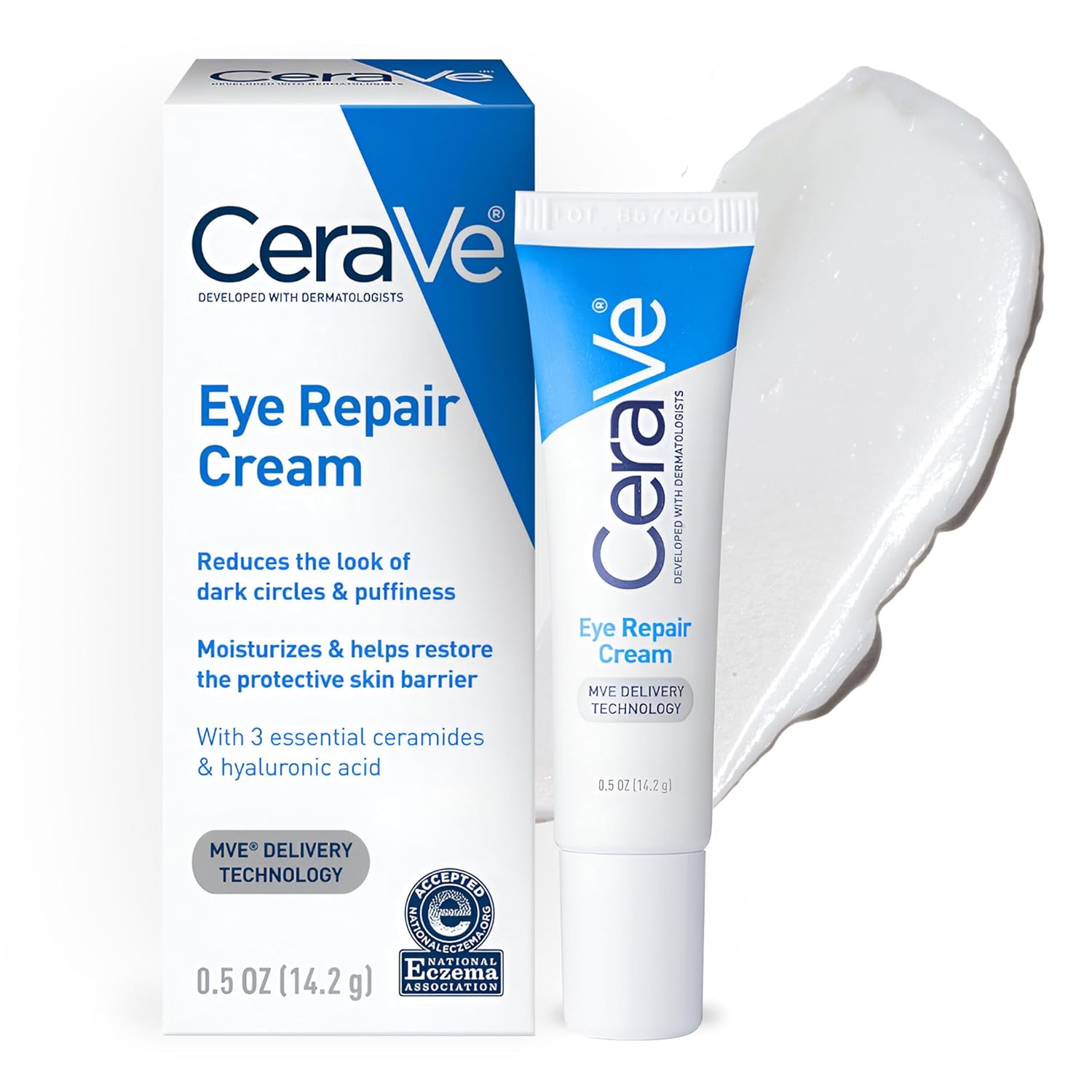
CeraVe’s Eye Repair Cream takes the brand’s signature barrier-first philosophy to the eye area. The formula contains three essential ceramides, hyaluronic acid, and niacinamide, without retinol or peptides. This makes it the gentlest option in this review and particularly well-suited for those with reactive skin or those who are new to dedicated eye creams.
The ceramide combination directly addresses the compromised skin barrier that contributes to dryness-related fine lines around the eyes. When the skin barrier is functioning properly, it retains moisture more effectively, which reduces the appearance of fine lines caused by dehydration rather than structural collagen loss.
For those who cannot tolerate retinol around the eyes or who are pregnant, this represents a safe and effective choice that still delivers meaningful improvement in skin hydration and texture.
This is best for sensitive skin or those who need a gentle barrier-repair eye cream without active retinol.
Advantages
- Three essential ceramides for barrier repair
- Fragrance-free and hypoallergenic
- Niacinamide for tone and texture
- Hyaluronic acid for hydration
- Suitable for sensitive and reactive skin
- Affordable and widely accessible
Drawbacks
- No retinol for collagen stimulation
- Limited impact on deep or established crow’s feet
- Rich texture may not suit very oily skin
2. Neutrogena Rapid Wrinkle Repair Retinol Eye Cream
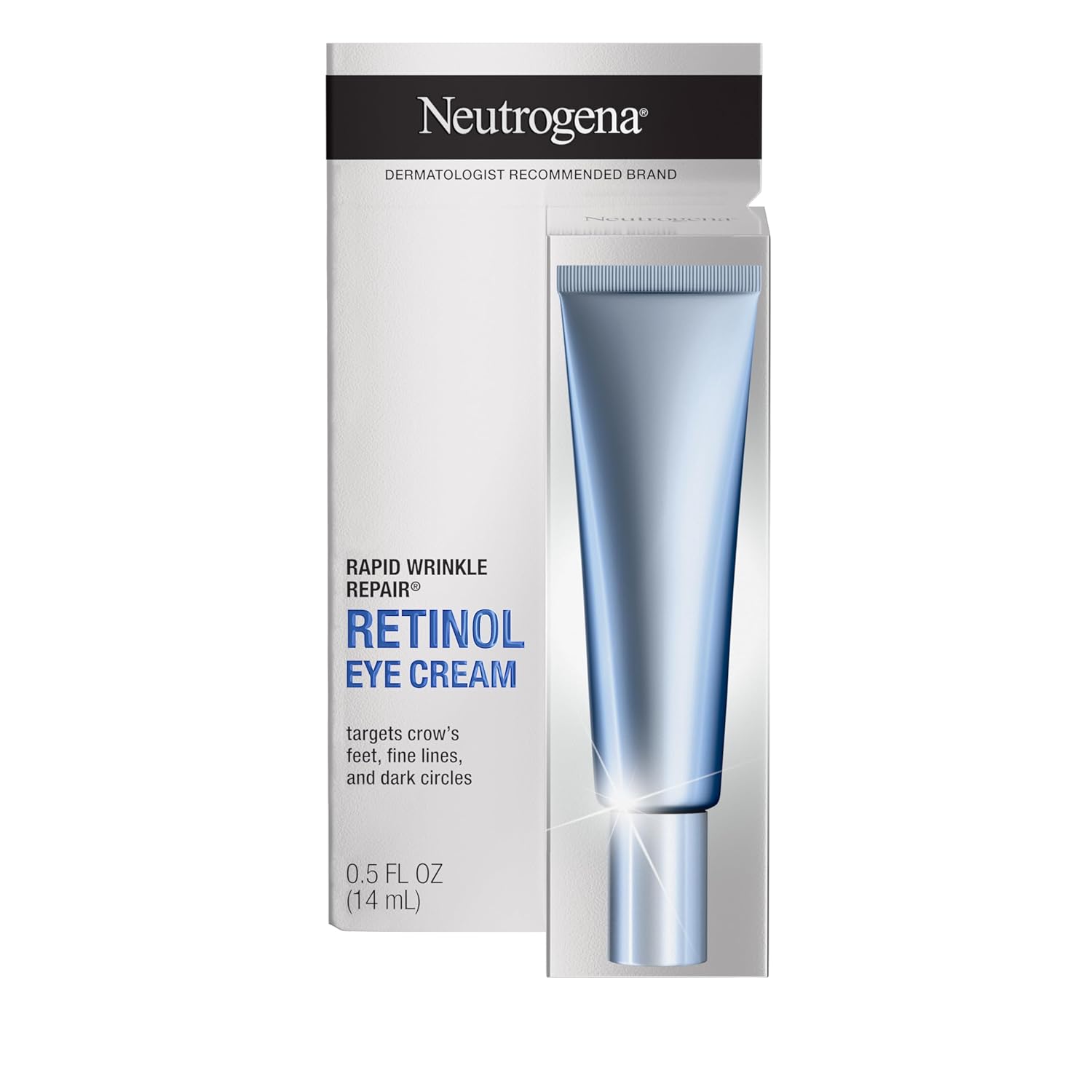
Neutrogena’s approach to eye area retinol uses their accelerated retinol SA system, which combines retinol with glucose complex and hyaluronic acid for a dual-action formula that addresses both collagen stimulation and surface hydration. The hyaluronic acid component plumps the surface of fine lines by drawing moisture into the skin, while retinol works at the deeper cellular level over time.
The texture is a light cream that absorbs without migrating into the eye and is fragrance-free, an important detail for a product used close to the eyes. The formula suits normal to dry skin particularly well. Those with oily or combination skin around the eye area will find it absorbs cleanly.
The accelerated delivery system is formulated to show visible surface improvements more quickly than conventional retinol, though the deeper collagen changes still take the standard 8 to 12 weeks.
This is best for someone looking for an accessible drugstore retinol eye cream with added hydration.
Advantages
- Retinol SA accelerated delivery system
- Contains hyaluronic acid for surface plumping
- Fragrance-free formulation
- Absorbs without migrating into eyes
- Widely available and affordable
Drawbacks
- Retinol SA is not identical to pure retinol in mechanism
- Results on deeper crow’s feet require sustained use
2. Neutrogena Rapid Wrinkle Repair Retinol Eye Cream
Neutrogena’s approach to eye area retinol uses their accelerated retinol SA system, which combines retinol with glucose complex and hyaluronic acid for a dual-action formula that addresses both collagen stimulation and surface hydration. The hyaluronic acid component plumps the surface of fine lines by drawing moisture into the skin, while retinol works at the deeper cellular level over time.
The texture is a light cream that absorbs without migrating into the eye and is fragrance-free, an important detail for a product used close to the eyes. The formula suits normal to dry skin particularly well. Those with oily or combination skin around the eye area will find it absorbs cleanly.
The accelerated delivery system is formulated to show visible surface improvements more quickly than conventional retinol, though the deeper collagen changes still take the standard 8 to 12 weeks.
This is best for someone looking for an accessible drugstore retinol eye cream with added hydration.
Advantages
- Retinol SA accelerated delivery system
- Contains hyaluronic acid for surface plumping
- Fragrance-free formulation
- Absorbs without migrating into eyes
- Widely available and affordable
Drawbacks
- Retinol SA is not identical to pure retinol in mechanism
- Results on deeper crow’s feet require sustained use
5. La Roche-Posay Pigmentclar Eye Cream
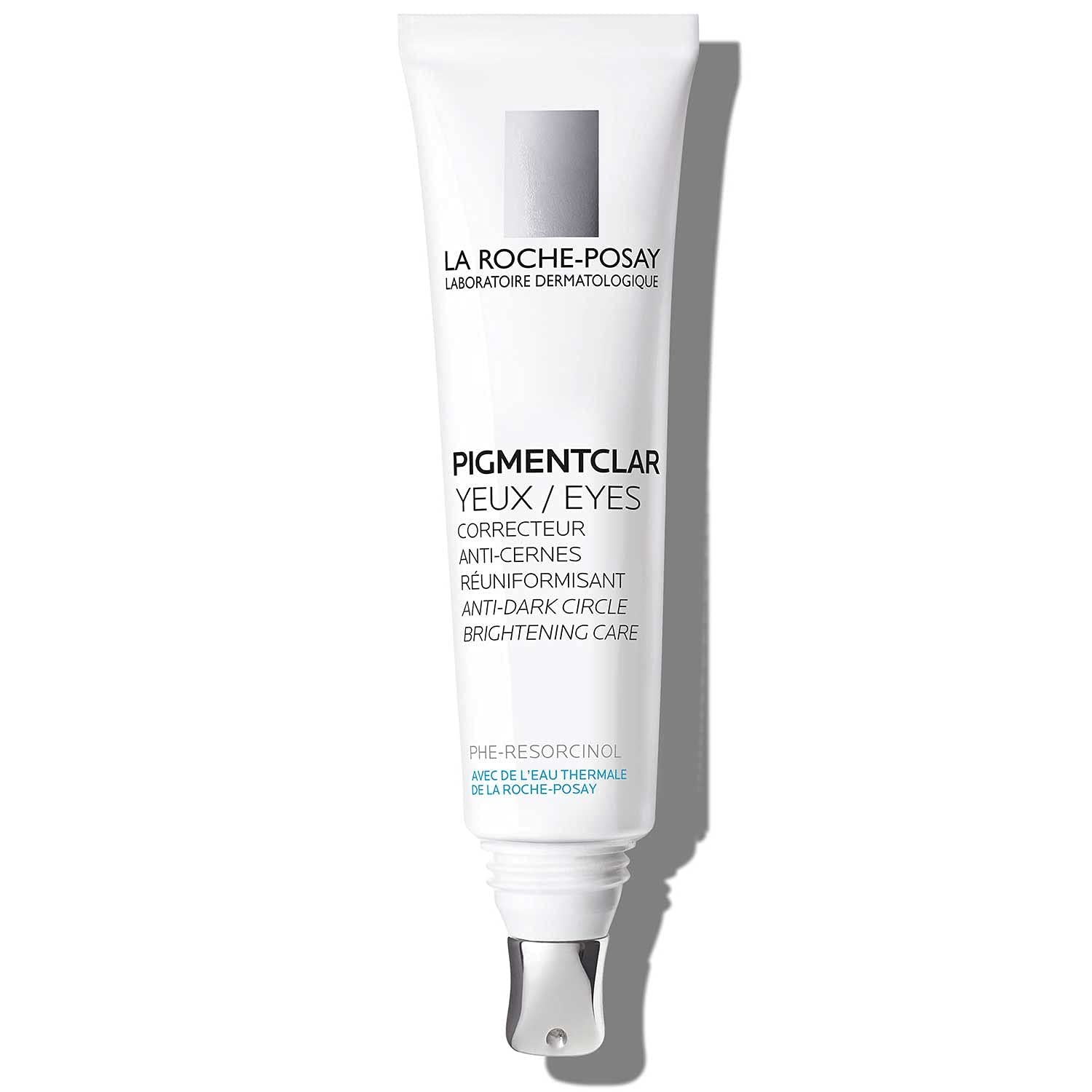
La Roche-Posay’s Pigmentclar Eye Cream is primarily formulated to target dark circles and uneven pigmentation around the eyes, but it also contains caffeine and a moisturizing complex that addresses the fine lines and puffiness that accompany crow’s feet. Caffeine has a well-documented vasoconstrictive effect that reduces puffiness and the appearance of dark circles by constricting blood vessels near the surface of the skin.
The light, cooling texture is particularly pleasant for morning use when puffiness is most pronounced. The formula also contains LHA (lipo-hydroxy acid), a gentle derivative of salicylic acid that provides mild exfoliation, supporting cell turnover at the eye area without the irritation risk of stronger acids.
For those whose primary concern is dark circles accompanied by fine lines, this is a strongly targeted choice from a dermatologically credible brand.
This is best for someone whose primary eye area complaint includes dark circles alongside fine lines and crow’s feet.
Advantages
- Caffeine for puffiness and dark circles
- LHA for gentle exfoliation
- Light, cooling texture ideal for mornings
- Dermatologist-tested formulation
- La Roche-Posay thermal spring water base
Drawbacks
- No retinol for deep wrinkle treatment
- Less effective on established crow’s feet than retinol products
- Higher price than drugstore alternatives
6. Kiehl’s Creamy Eye Treatment with Avocado
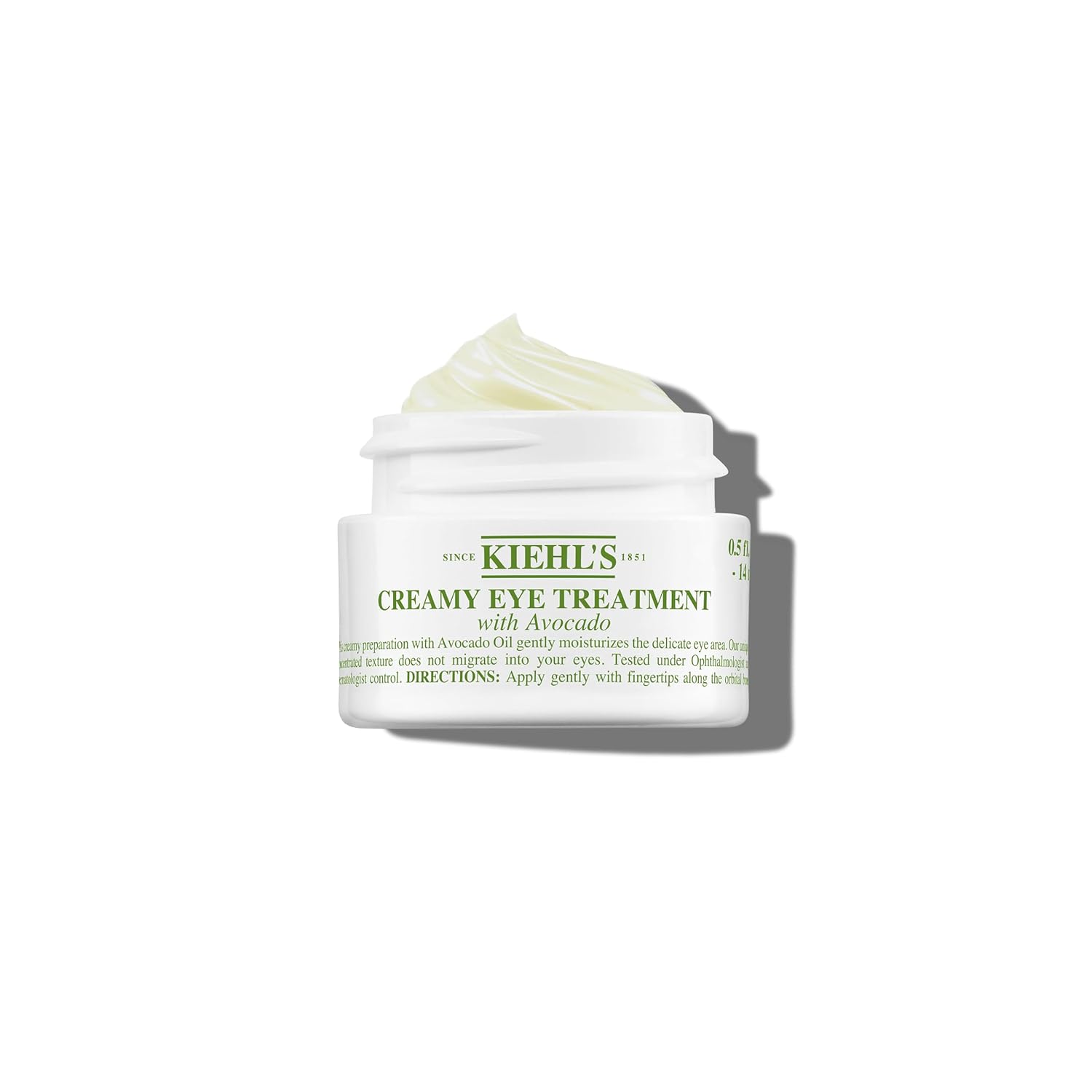
Kiehl’s Creamy Eye Treatment is one of the brand’s most longstanding products, formulated with avocado oil and shea butter as its central moisturizing agents. This is a richly emollient product rather than an active-ingredient-driven one. It is best understood as a superior hydrator and barrier moisturizer rather than a collagen-stimulating treatment.
The avocado oil component contains oleic acid and vitamin E, both of which support skin suppleness and protect against oxidative damage. For those with very dry, crepey skin around the eyes, the deep moisturization this cream provides can reduce the appearance of fine lines caused by dehydration.
The texture is notably rich, which suits those with dry under-eye skin but may cause milia in those prone to them. Use a very small amount applied gently and allow it to absorb before applying other products.
This is best for those with dry or mature skin whose crow’s feet are compounded by significant dryness and crepiness.
Advantages
- Rich avocado oil and shea butter base
- Excellent deep moisturization for dry skin
- Vitamin E for antioxidant protection
- Long-standing and well-trusted product
- Suitable for very dry and mature skin
Drawbacks
- No retinol, peptides, or collagen-stimulating actives
- Rich texture can cause milia in some users
- Not suitable as a standalone anti-aging treatment
7. Clinique All About Eyes Rich
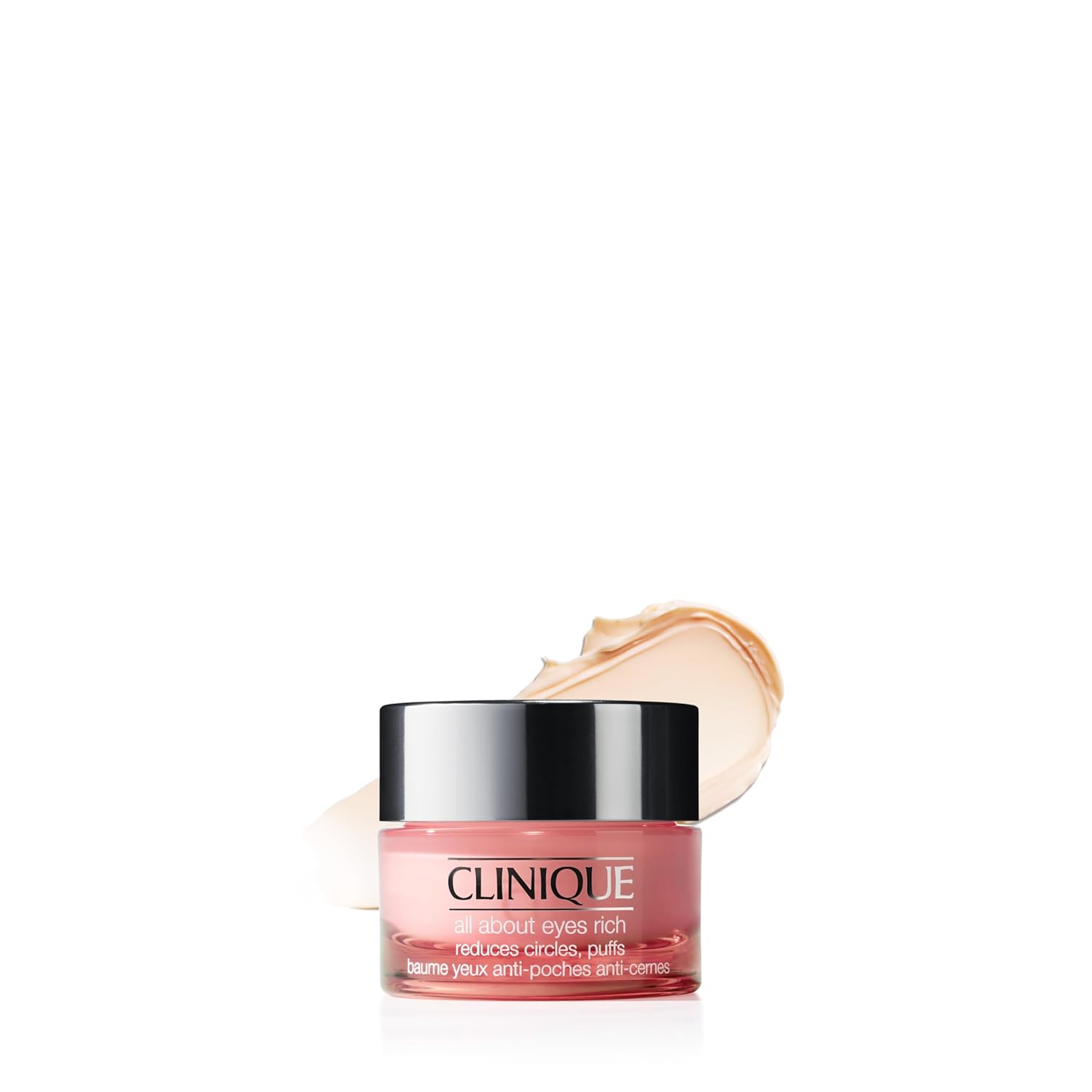
Clinique’s All About Eyes Rich is an allergy-tested, fragrance-free eye cream formulated with a blend of moisturizers and mild plant-based brighteners. It is positioned as a multi-purpose eye area moisturizer that reduces puffiness, minimizes the look of lines, and depuffs the under-eye area.
The formula is among the most gentle on this list and is certified allergy-tested and ophthalmologist-tested, making it a safe choice for contact lens wearers.
The moisturizing complex includes squalane and a range of humectants that maintain hydration levels throughout the day. The cream absorbs without leaving a heavy residue and works well under makeup.
For someone new to eye creams who wants a gentle, reliable starting product before committing to a more active formula, this is a sensible and well-regarded entry point.
This is best for contact lens wearers or those with extreme sensitivity who need an ophthalmologist-tested, gentle eye cream.
Advantages
- Allergy-tested and ophthalmologist-tested
- Fragrance-free formulation
- Suitable for contact lens wearers
- Squalane and humectant complex for hydration
- Works well under makeup
Drawbacks
- No retinol or peptides for collagen support
- Minimal effect on deep crow’s feet
- Rich texture may not suit all skin types
Understanding What Makes a Great Eye Cream for Crow’s Feet
1. Retinol Concentration and Tolerance
Retinol is the most evidence-supported topical ingredient for reducing crow’s feet. However, the periorbital skin is thinner and more sensitive than the rest of the face, so lower concentrations are appropriate. Start with two to three applications per week and avoid applying too close to the lash line. The skin should be dry before applying retinol to reduce absorption speed and irritation risk.
2. Peptide Signals
Peptides are short amino acid chains that signal fibroblasts to produce more collagen and elastin. Unlike retinol, they do not cause irritation, making them suitable for daily use without an adjustment period. They work more gradually than retinol but are appropriate for those who cannot tolerate retinol around the eyes.
3. Packaging Integrity
For any eye cream containing retinol or vitamin C, packaging that limits air and light exposure is a functional quality indicator. Pump or tube dispensers with minimal air contact protect active ingredients better than wide-mouth jars. An eye cream stored in an open jar will degrade faster, regardless of formula quality.
4. SPF Protection for the Eye Area
One of the leading causes of crow’s feet is cumulative UV damage, and the eye area is chronically under-protected. Wearing SPF-containing sunscreen that covers the outer eye area, and wearing UV-blocking sunglasses outdoors, will prevent new crow’s feet from forming more effectively than any topical product can reverse existing ones.
5. Application Technique
Eye cream is wasted if applied incorrectly. Use a rice-grain-sized amount per eye. Apply with the ring finger using a gentle tapping motion from the outer corner inward. Avoid rubbing or pulling the skin, as the mechanical stress over time contributes to the formation of crow’s feet.
6. Realistic Expectations by Skin Type
Very dry or dehydrated skin shows crow’s feet that respond quickly to good moisturization. Established deep crow’s feet from decades of muscle movement and collagen loss require retinol and time. Setting expectations based on the cause of your crow’s feet will help you evaluate products accurately rather than abandoning them prematurely.
The Science of Crow’s Feet: Why They Form Where They Do
Crow’s feet form at the outer corners of the eyes for several converging reasons. The orbicularis oculi muscle, which controls eye closing and squinting, radiates outward from the eye and creates the characteristic fan-shaped wrinkle pattern with each contraction. Over time, repeated contractions alongside declining collagen and elastin produce permanent creases.
The skin at the outer eye corner receives significant UV exposure because it faces outward and is difficult to shade effectively. Photoaging from UV radiation breaks down the collagen and elastin fibers that would otherwise allow the skin to spring back after each muscle contraction.
The thin nature of periorbital skin also means it loses water more quickly than elsewhere on the face, making dehydration a compounding factor. Addressing that dryness through a dedicated eye cream reduces the visibility of fine lines and creates a better surface for active ingredients to work on.
Understanding this three-part cause (muscle movement, UV damage, and collagen loss) explains why a truly effective eye cream routine combines a daily SPF around the eye area, a retinol product at night, and a hydrating moisturizer throughout the day.
Frequently Asked Questions
1. At what age should I start using eye cream?
There is no single correct age, but preventive use from the late 20s or early 30s makes sense given that collagen begins declining at 25. If crow’s feet are already visible at rest, your skin will benefit more from an active formula with retinol or peptides rather than a basic hydrating product.
2. Can I use my face moisturizer around my eyes instead of an eye cream?
Many dermatologists consider this acceptable if the face moisturizer is gentle and free of irritating actives. Dedicated eye creams are typically formulated to a tighter tolerance for irritation and are less likely to migrate into the eye. For strong actives like retinol or AHAs, use a product specifically designed for the periorbital area.
3. How long does it take for eye cream to reduce crow’s feet?
Surface improvements from hydration can appear within days. Meaningful reduction in the depth of crow’s feet from retinol or peptides typically requires 8 to 12 weeks of consistent use. Deep, established lines require months of consistent treatment before noticeable change occurs.
4. Can eye cream make crow’s feet worse?
Using products with high concentrations of retinol or acids around the eyes can cause irritation, peeling, and secondary hyperpigmentation if the skin is not given adequate time to adjust. Using a heavy cream not formulated for the eye area can cause milia. Following application guidelines and choosing products formulated for the periorbital area avoids these outcomes.
5. Does caffeine really reduce crow’s feet?
Caffeine is primarily effective for puffiness reduction through its vasoconstrictive effect rather than for crow’s feet specifically. It is a useful ingredient for under-eye puffiness but has limited direct impact on the wrinkle lines themselves.
6. Should eye cream go on before or after moisturizer?
Apply eye cream before your face moisturizer as a general rule. This ensures the lighter eye product absorbs properly without being blocked by a heavier cream. Apply eye cream by gently tapping, then apply face moisturizer from the outside in, stopping at the orbital bone.
7. Is retinol safe around the eyes during pregnancy?
Retinol and all retinoids are generally advised against during pregnancy. This applies to eye creams as well as face products. Ceramide and peptide-based eye creams are considered safe alternatives during pregnancy. Always consult a healthcare provider for personal guidance.
8. Can sunscreen replace eye cream?
No. Sunscreen prevents new UV-driven damage, which is essential, but it does not provide the hydration, barrier repair, or collagen-stimulating actives that an eye cream delivers. The two products serve different and complementary functions.
Wrapping It Up
Crow’s feet respond to the right ingredients given enough time. The key is choosing a product based on the severity of your concerns: a gentle hydrating cream for early fine lines, a retinol formula for established wrinkles, and daily SPF application to prevent further damage.
For most people, RoC Retinol Correxion Eye Cream offers the strongest evidence-backed approach to reducing crow’s feet over time. Those with sensitive skin will get meaningful benefit from CeraVe Eye Repair Cream without the irritation risk. Either way, consistent use and realistic expectations are what turn a good product into visible results.